Vacuum tube for venous blood sampling
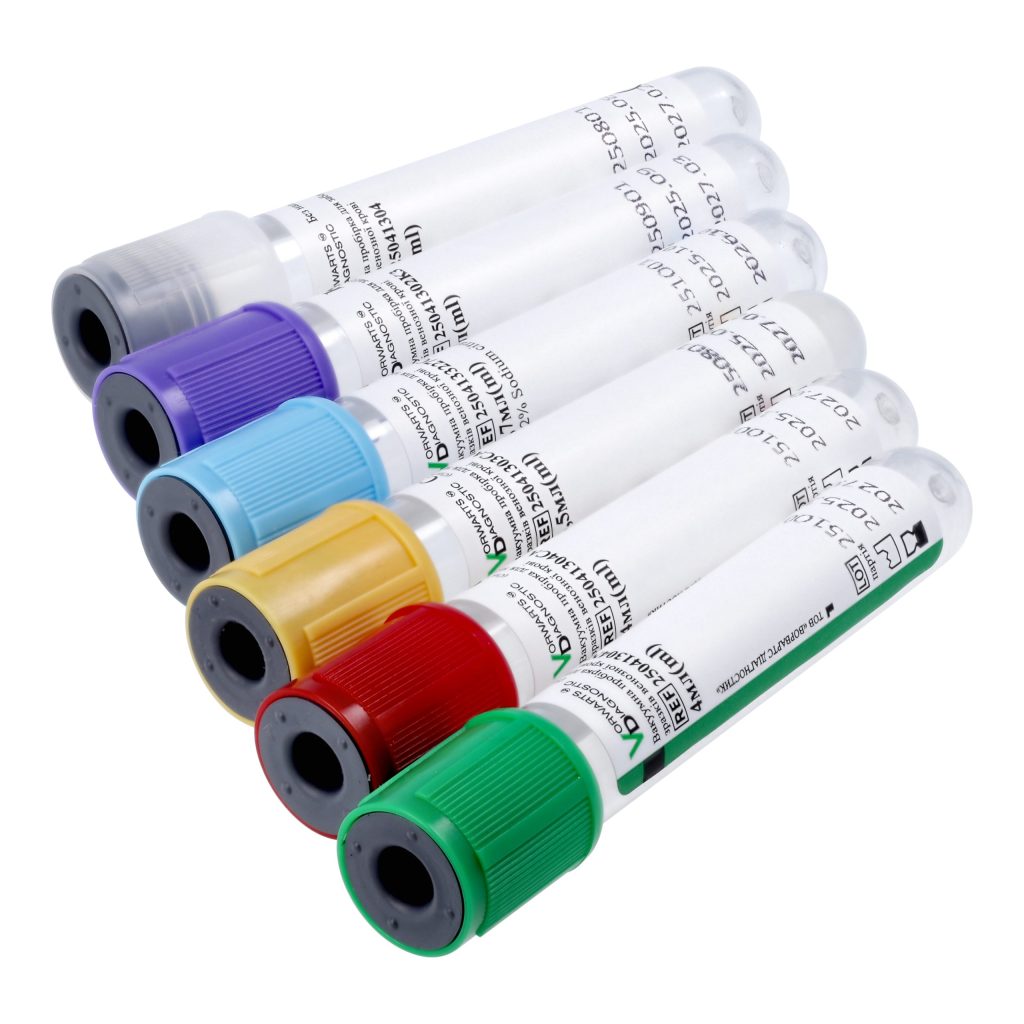
Vacuum tubes are sterile, sealed containers for the collection and transportation of venous blood samples in compliance with safety standards and laboratory accuracy. Each tube contains or does not contain certain reagents that determine its purpose for various types of studies (hematological, biochemical, coagulological, etc.). All tubes are made of high-quality transparent PET plastic, which provides mechanical resistance, inertness to reagents and good visibility of the sample.
Our assortment:
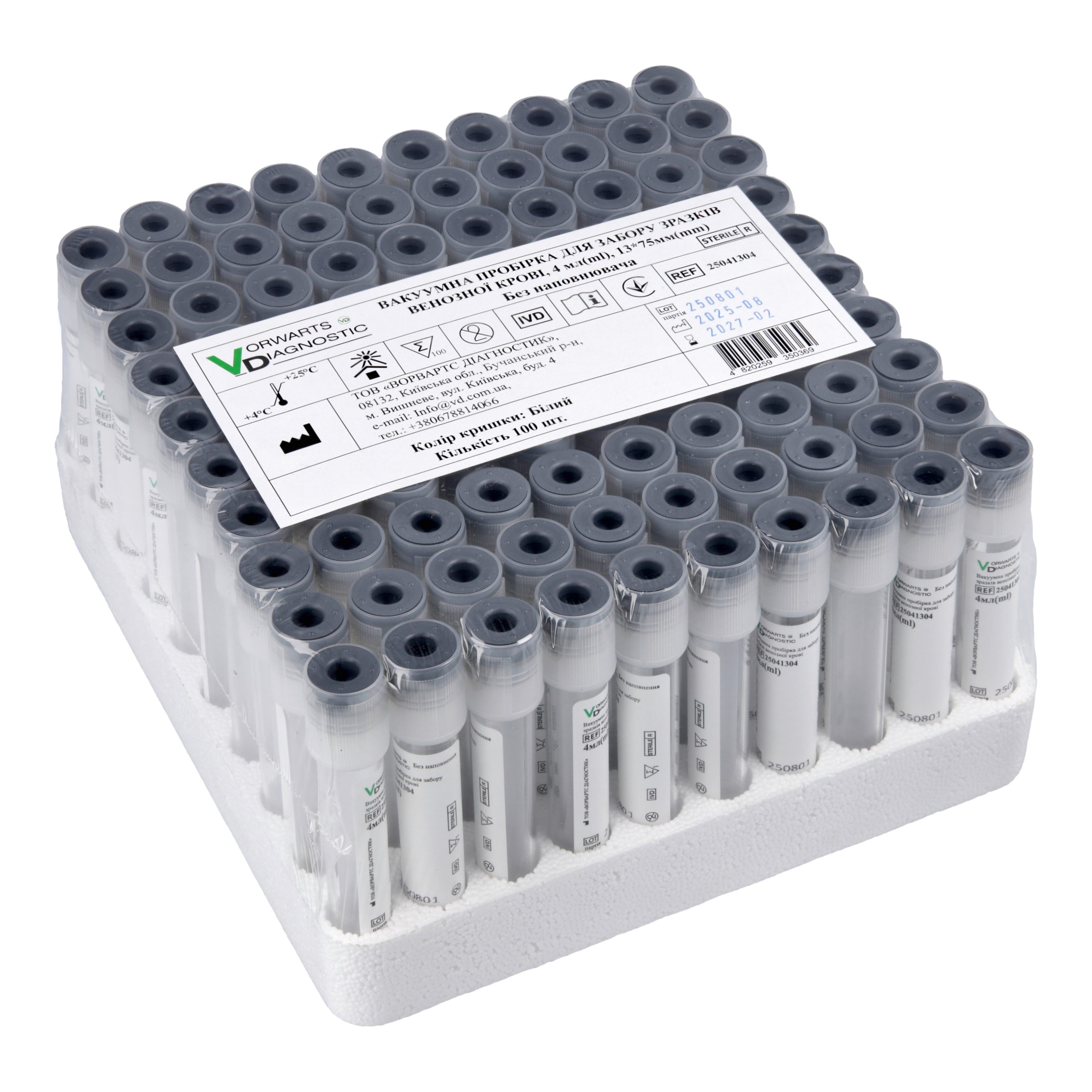
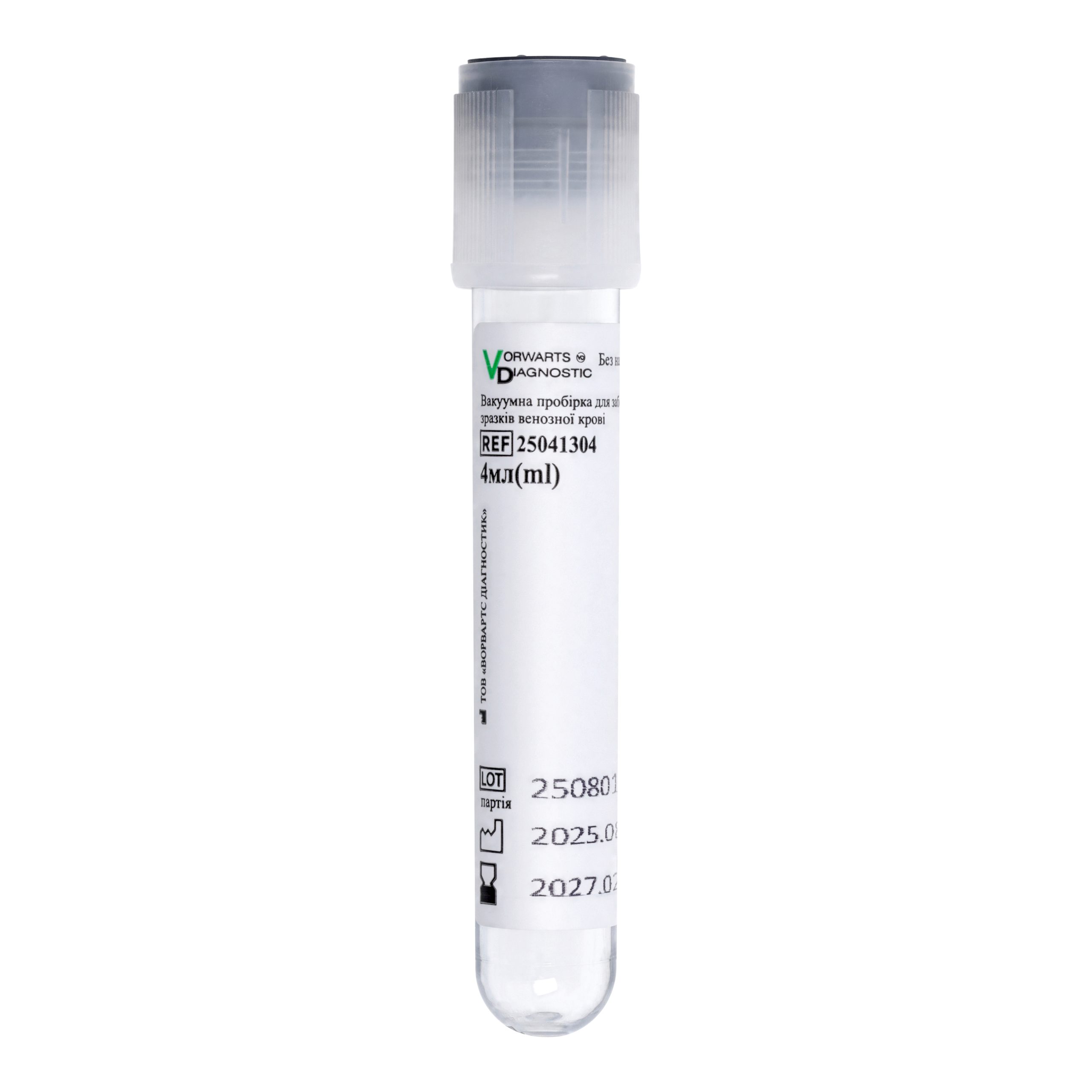
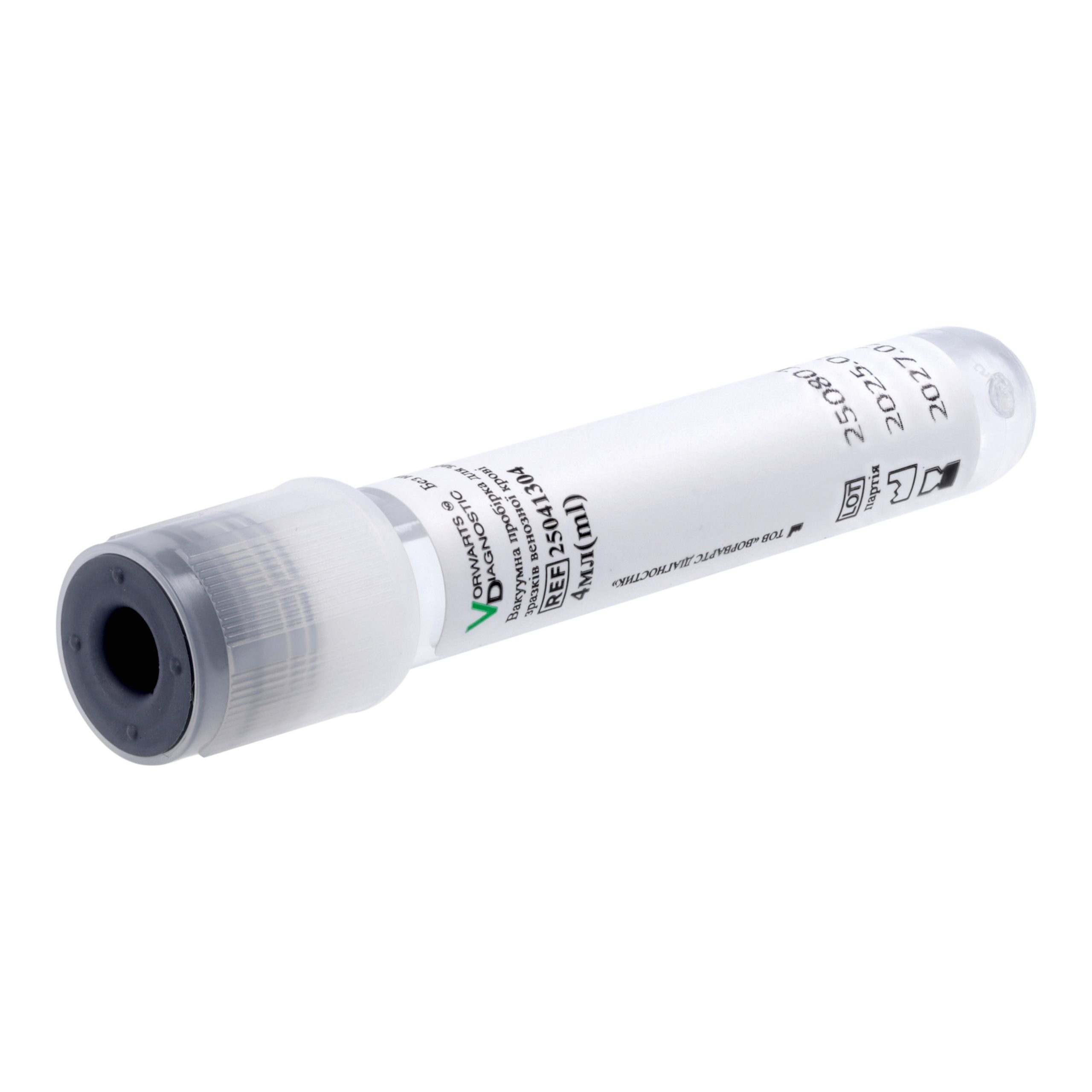
Scope: general clinical diagnosis, biobanking, immunological research, serology.
Study material: Venous blood, urine, cerebrospinal fluid and other body fluids.
Clotting time: up to 60 minutes.
Centrifugation: 1300-2000 g, 10 min.
Features: before centrifugation of tubes with serum, it is necessary to wait until the blood is completely clotted; does not contain reagents, ideal for specialized research or further processing according to the needs of the laboratory, for the storage and transportation of biomaterials.
Specifications:
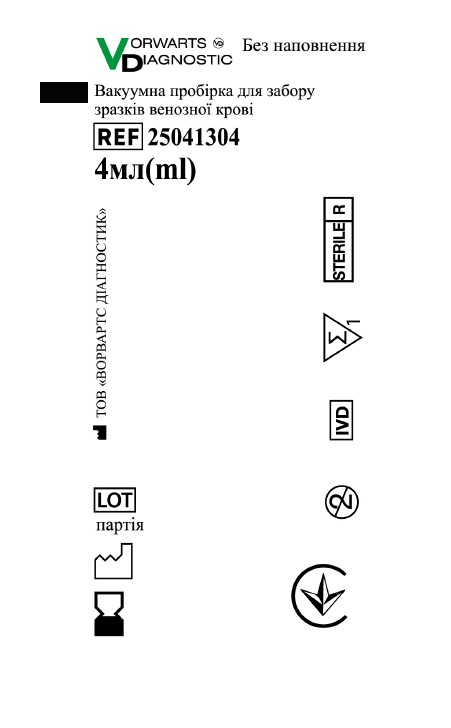
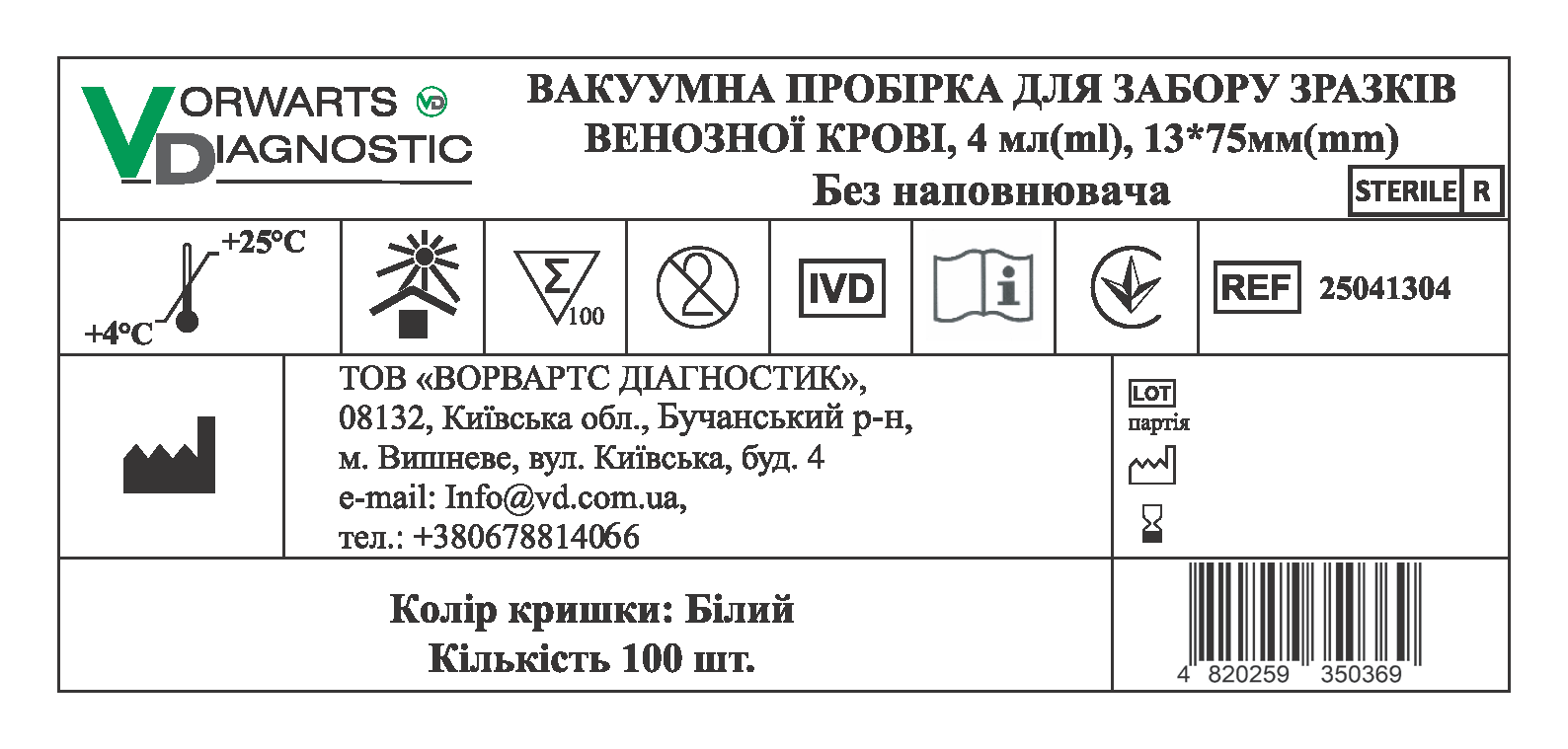
| Color | White |
| Filler | Without filler |
| Size 13*75 mm | Volume 2, 3 and 4 ml |
| Size 13*100 mm | Volume 5, 6 and 7 ml |
| Size 16*100 mm | Volume 8, 9 and 10 ml |
| Packaging | 100 pcs |
Scope: hematological studies, PCR diagnostics, determination of ESR, blood group and Rh factor, counting of blood elements, leukocyte formula, screening of antibodies.
Material for research: whole blood.
Collapse time: not collapse.
Centrifugation: 1500-2000 g, 10 min.
Features: K2 EDTA binds calcium ions, preventing clotting; optimal for accurate analysis of blood elements.
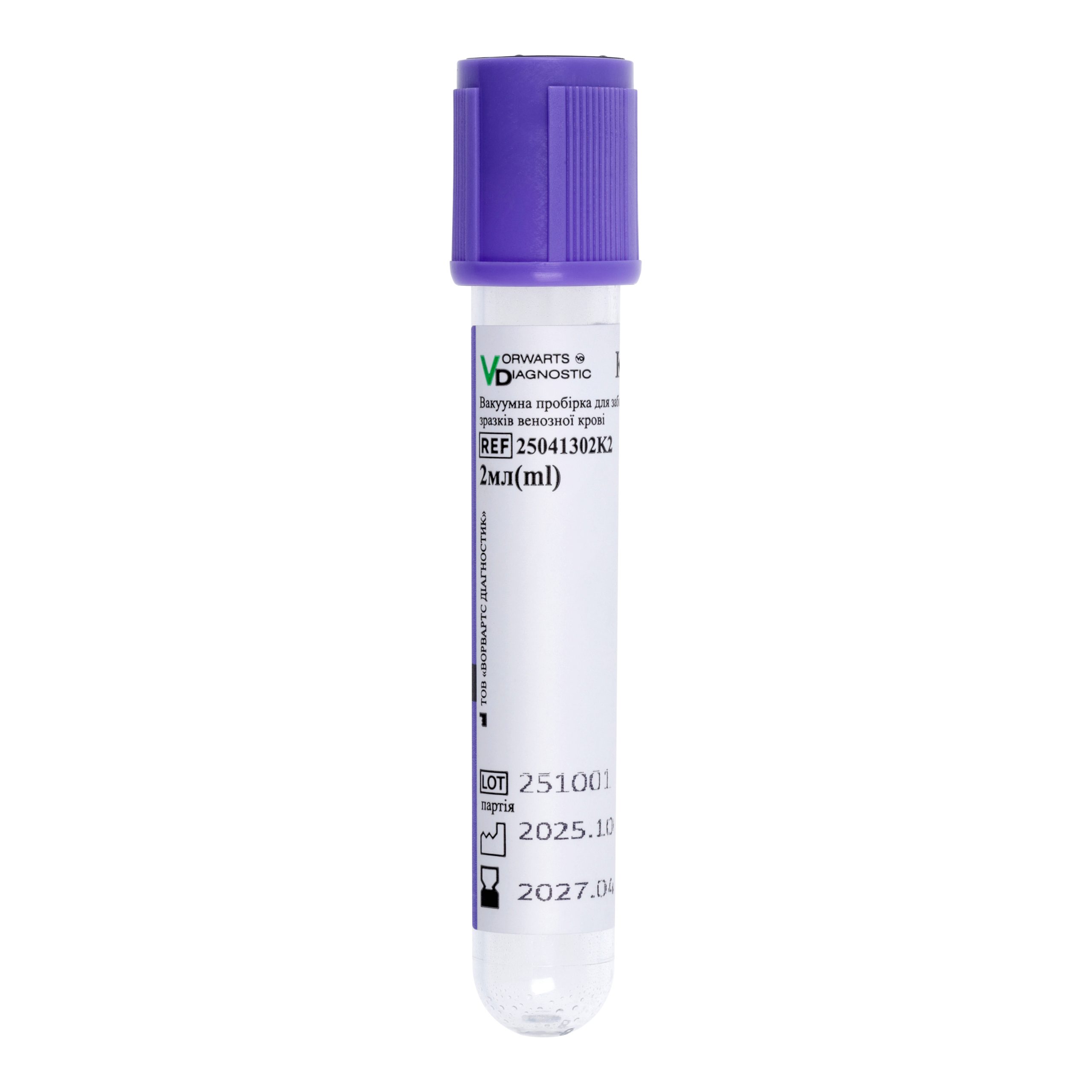
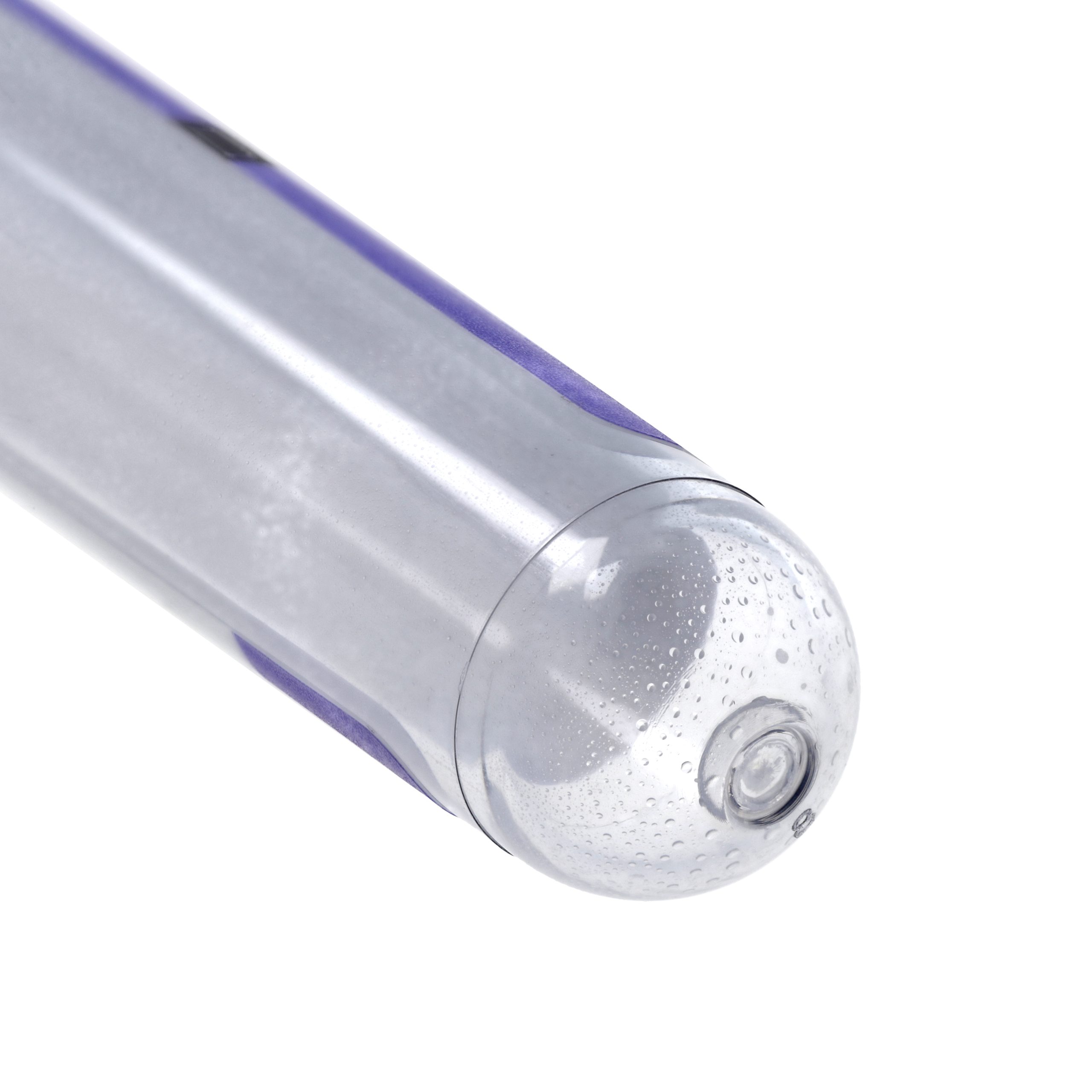
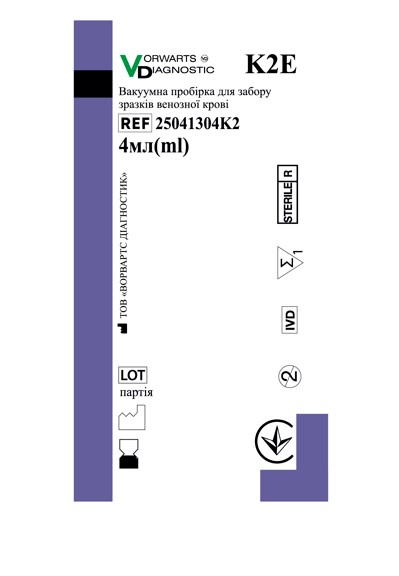
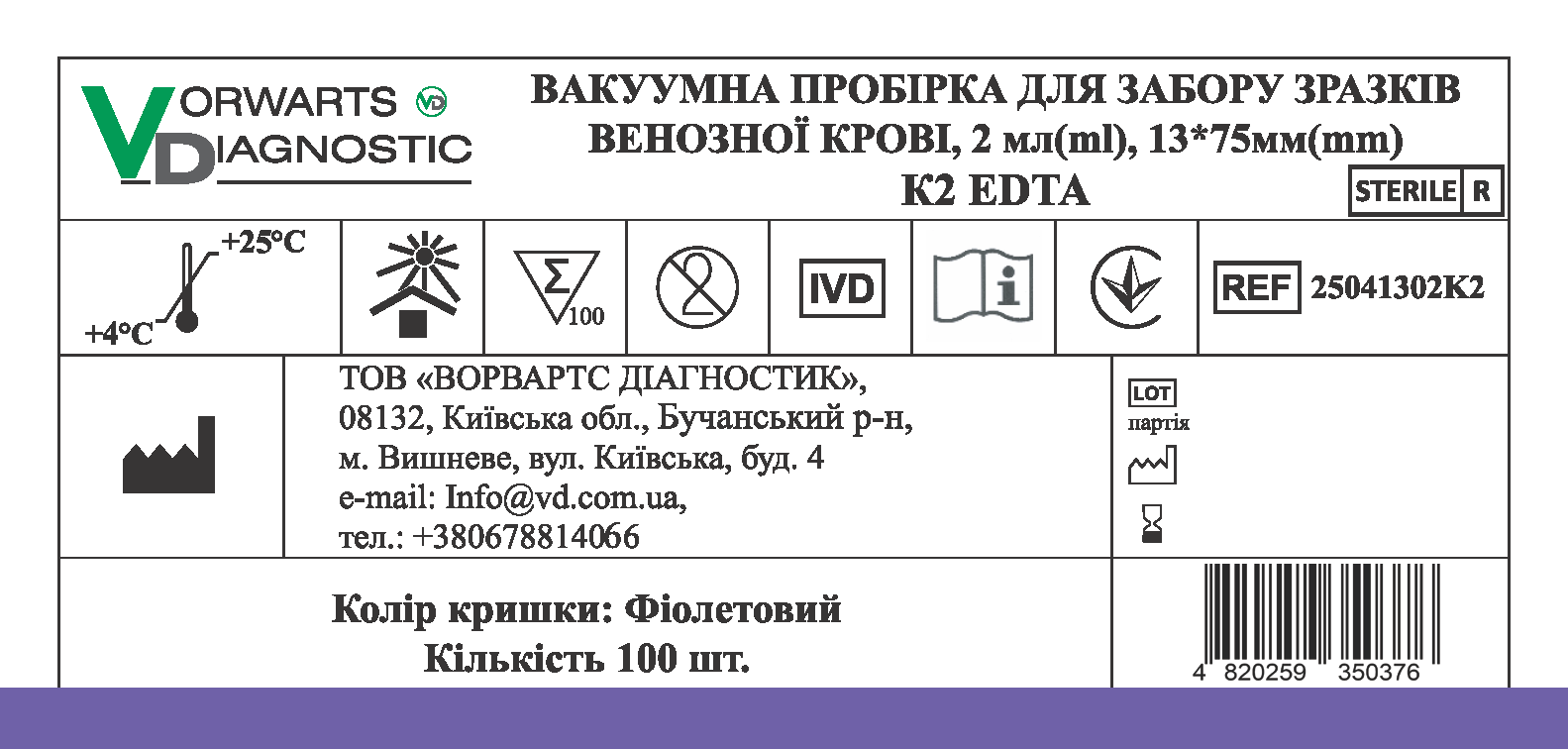
Specifications:
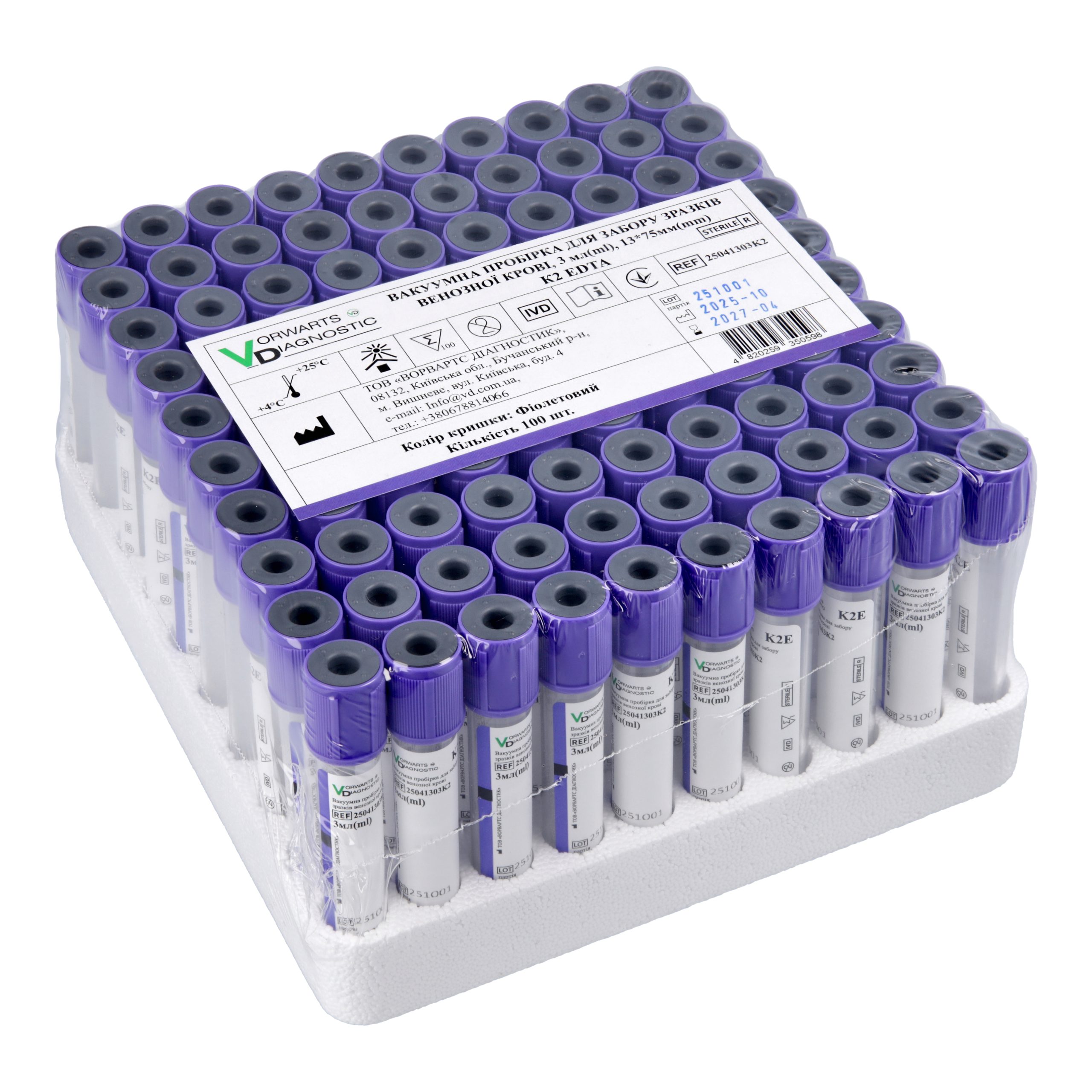
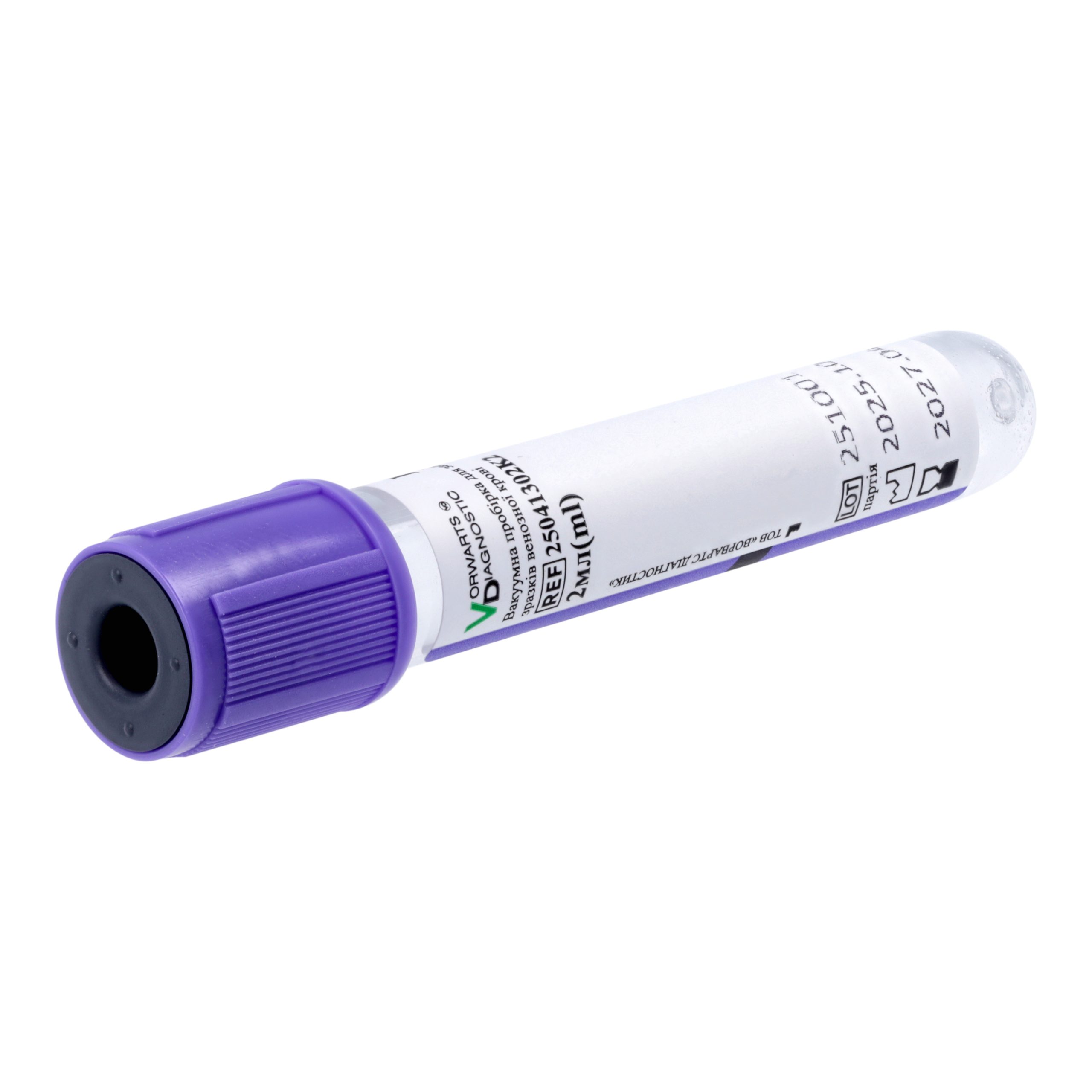
| Color | Purple |
| Filler | K2 EDTA |
| Size 13*75 mm | Volume 2, 3 and 4 ml |
| Size 13*100 mm | Volume 5, 6 and 7 ml |
| Size 16*100 mm | Volume 8, 9 and 10 ml |
| Packaging | 100 pcs |
Scope: hematological studies, PCR diagnostics, determination of ESR, blood group and Rh factor, counting of blood elements, leukocyte formula, screening of antibodies.
Material for research: whole blood.
Collapse time: not collapse.
Centrifugation: 1500-2000 g, 10 min.
Features: K3 EDTA liquid, more evenly mixed with blood; can sometimes change the volume of cell mass – not recommended for some precise techniques.
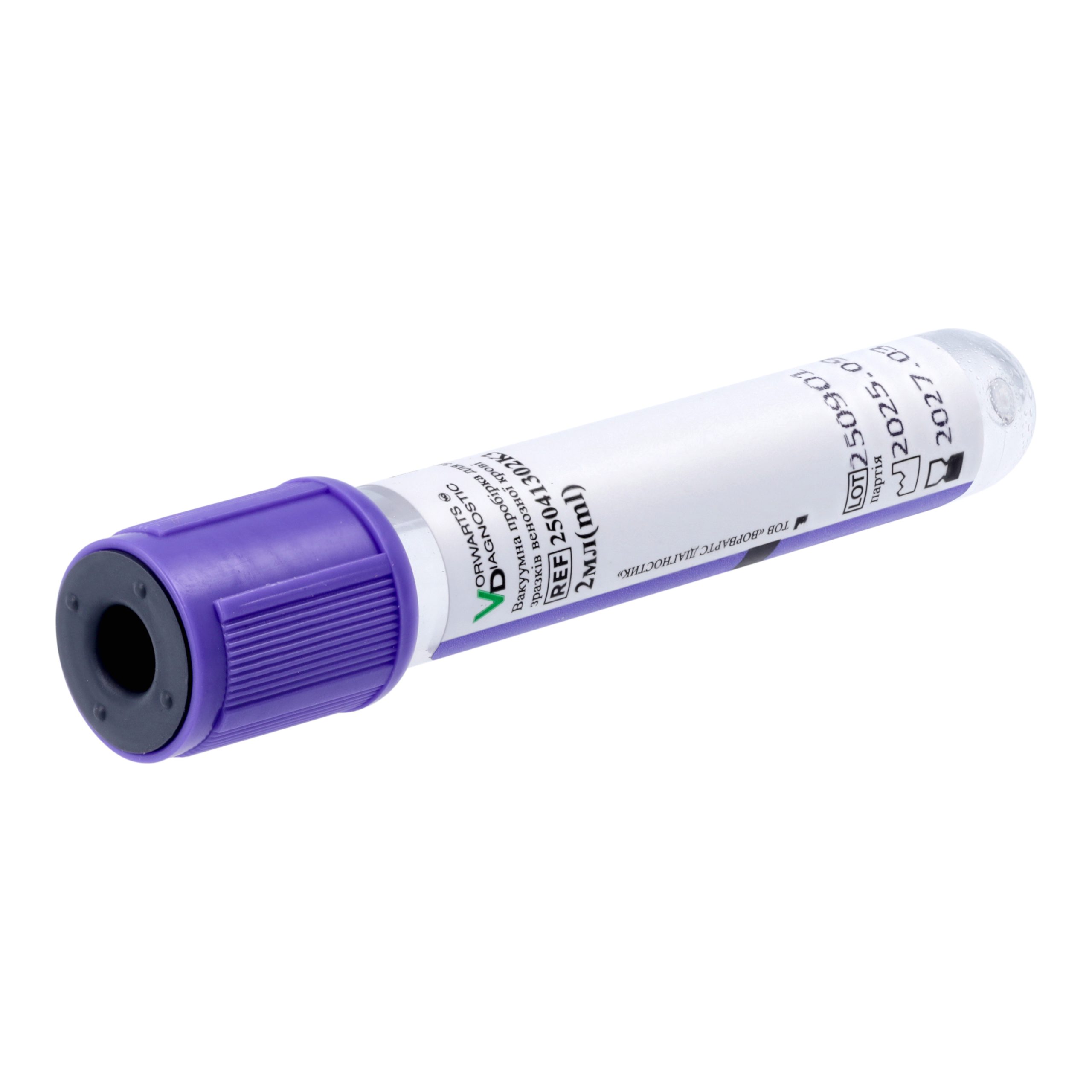
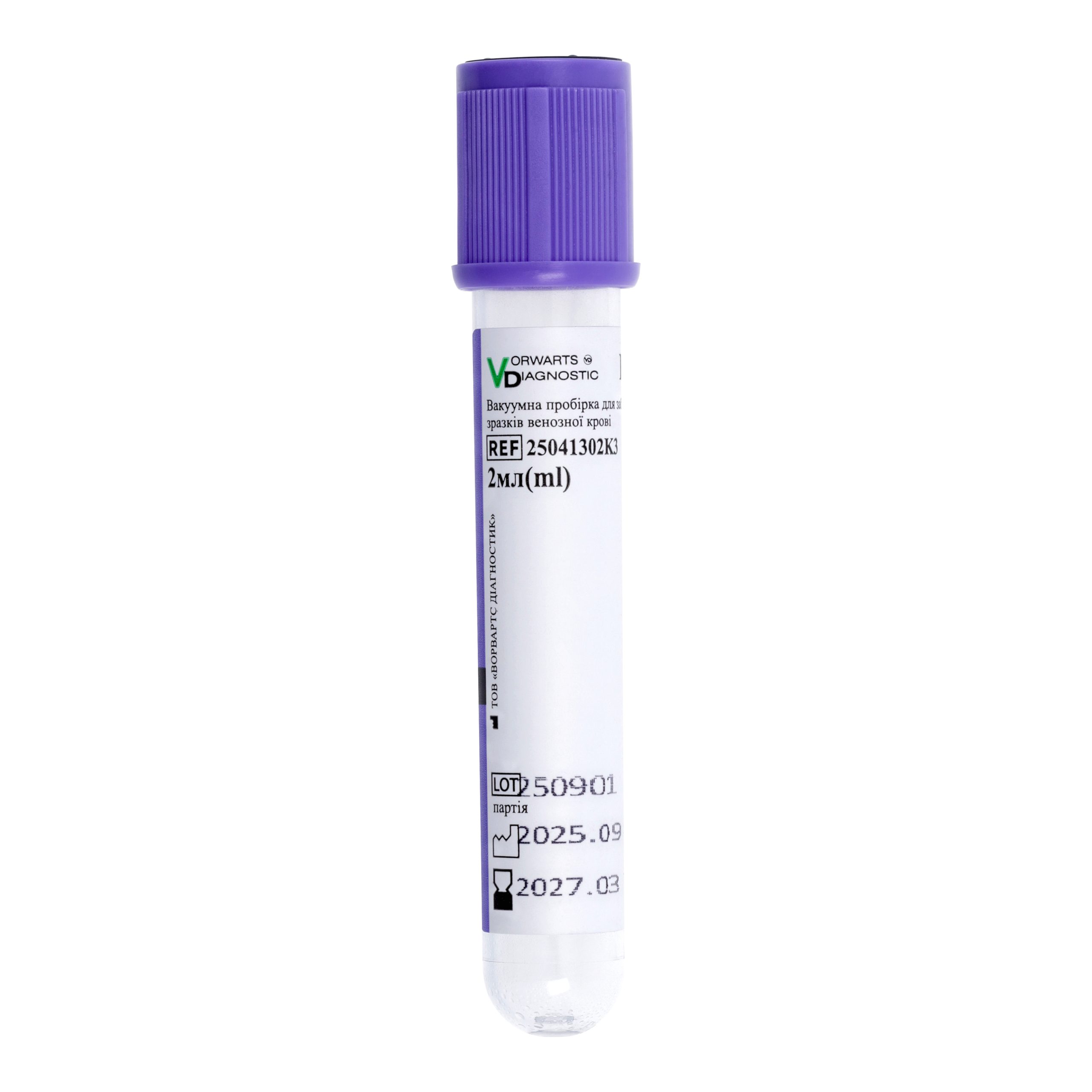
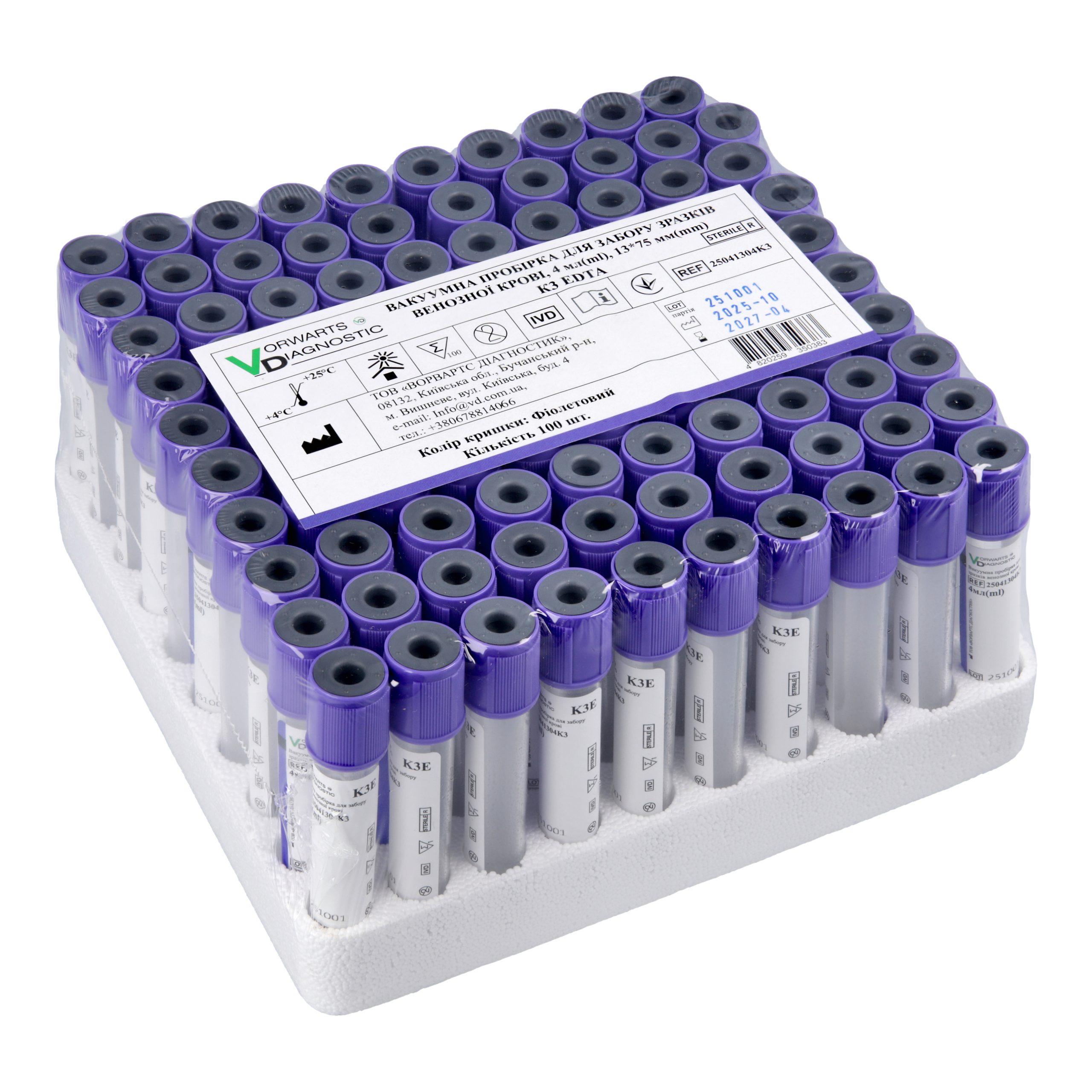
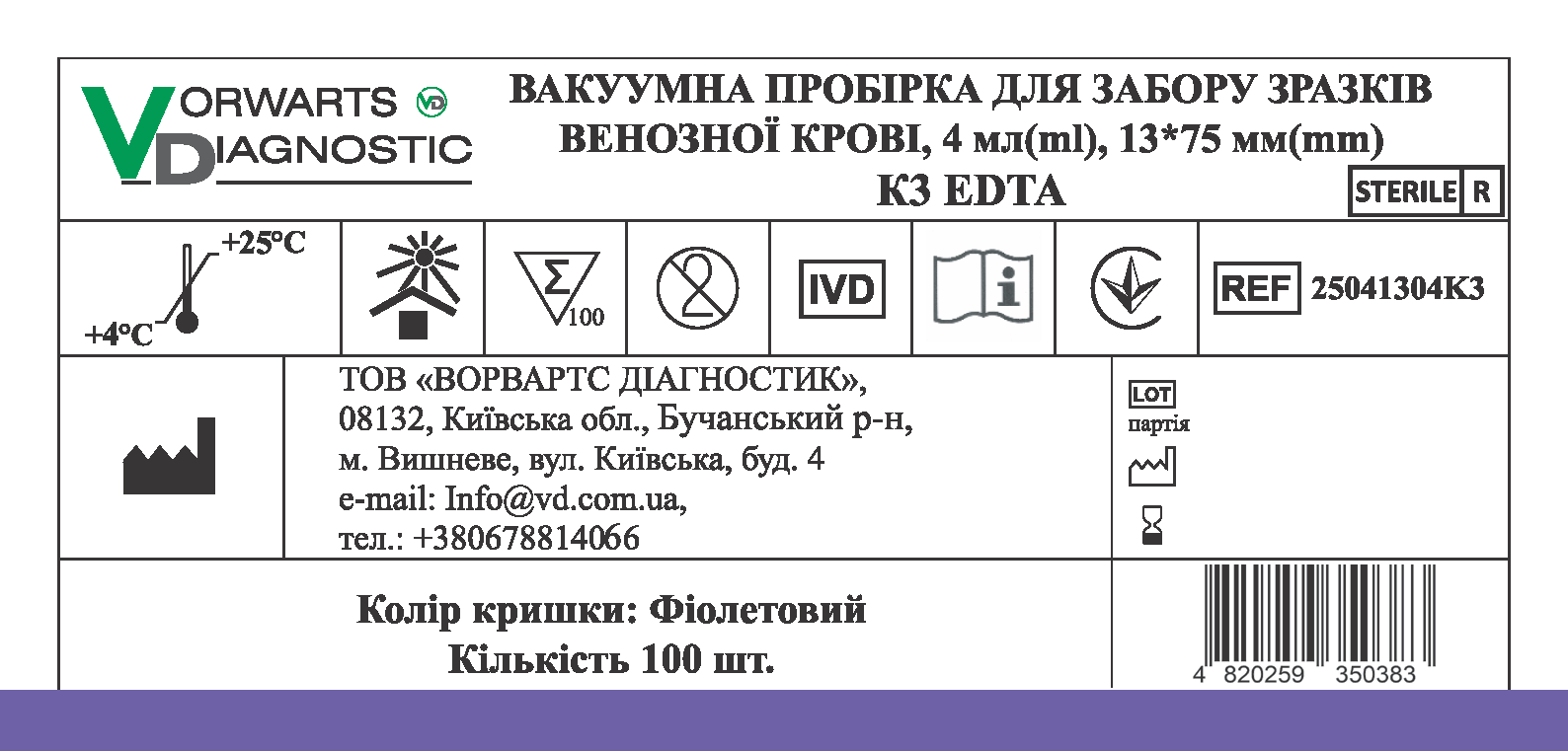
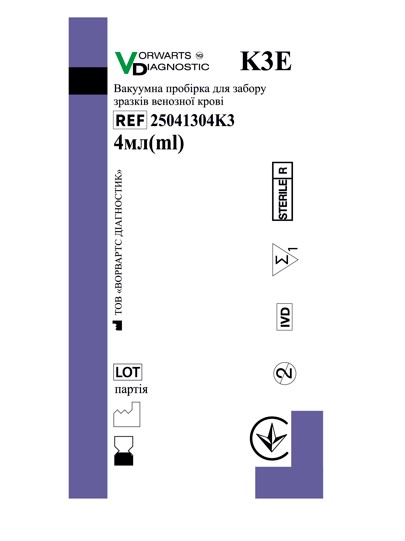
Specifications:
| Color | Purple |
| Filler | K3 EDTA |
| Size 13*75 mm | Volume 1, 2, 3 and 4 ml |
| Size 13*100 mm | Volume 5, 6 and 7 ml |
| Size 16*100 mm | Volume 8, 9 and 10 ml |
| Packaging | 100 pcs |
Field of application: hematology and molecular diagnostics, suitable for the preparation of pure plasma for virus studies, PCR studies.
Test material: blood plasma.
Collapse time: not collapse.
Centrifugation: 1500-2000 g, 10-15 min.
Features: the presence of the gel allows you to clearly separate the plasma after centrifugation, facilitates transportation and storage; immediately after taking blood into a vacuum tube with EDTA, it must be thoroughly and carefully mixed, turning 8-10 times.

Specifications:
| Color | Purple |
| Filler | K2EDTA & separator gel |
| Size 13*75 mm | Volume 2, 3 and 4 ml |
| Size 13*100 mm | Volume 5, 6 and 7 ml |
| Size 16*100 mm | Volume 8 and 9 ml |
| Packaging | 100 pcs |
Field of application: hematology and molecular diagnostics, suitable for the preparation of pure plasma for virus studies, PCR studies.
Test material: blood plasma.
Collapse time: not collapse.
Centrifugation: 1500-2000 g, 10-15 min.
Features: immediately after taking blood into a vacuum tube with EDTA, it must be thoroughly and gently mixed, turning 8-10 times.
Specifications:
| Color | Purple |
| Filler | K3 EDTA & separator gel |
| Size 13*75 мм | Volume 2, 3 and 4 ml |
| Size 13*100 мм | Volume 5, 6 and 7 ml |
| Size 16*100 мм | Volume 8 and 9 ml |
| Packaging | 100 pcs |
Field of application: biochemical studies, research on coats in clinical chemistry, immunology, serology, protein electrophoresis, used in blood banks, to determine protein fractions in blood serum and electrolytes.
Test material: serum.
Clotting time: 20-30 min.
Centrifugation: 1500-1800 g, 10 min.
Features: after taking a blood sample in a vacuum tube, it should be gently mixed by turning 5-6 times; before centrifuging the tubes with serum, it is necessary to wait for complete blood clotting. activator accelerates the process of clot formation, allows you to quickly get serum.
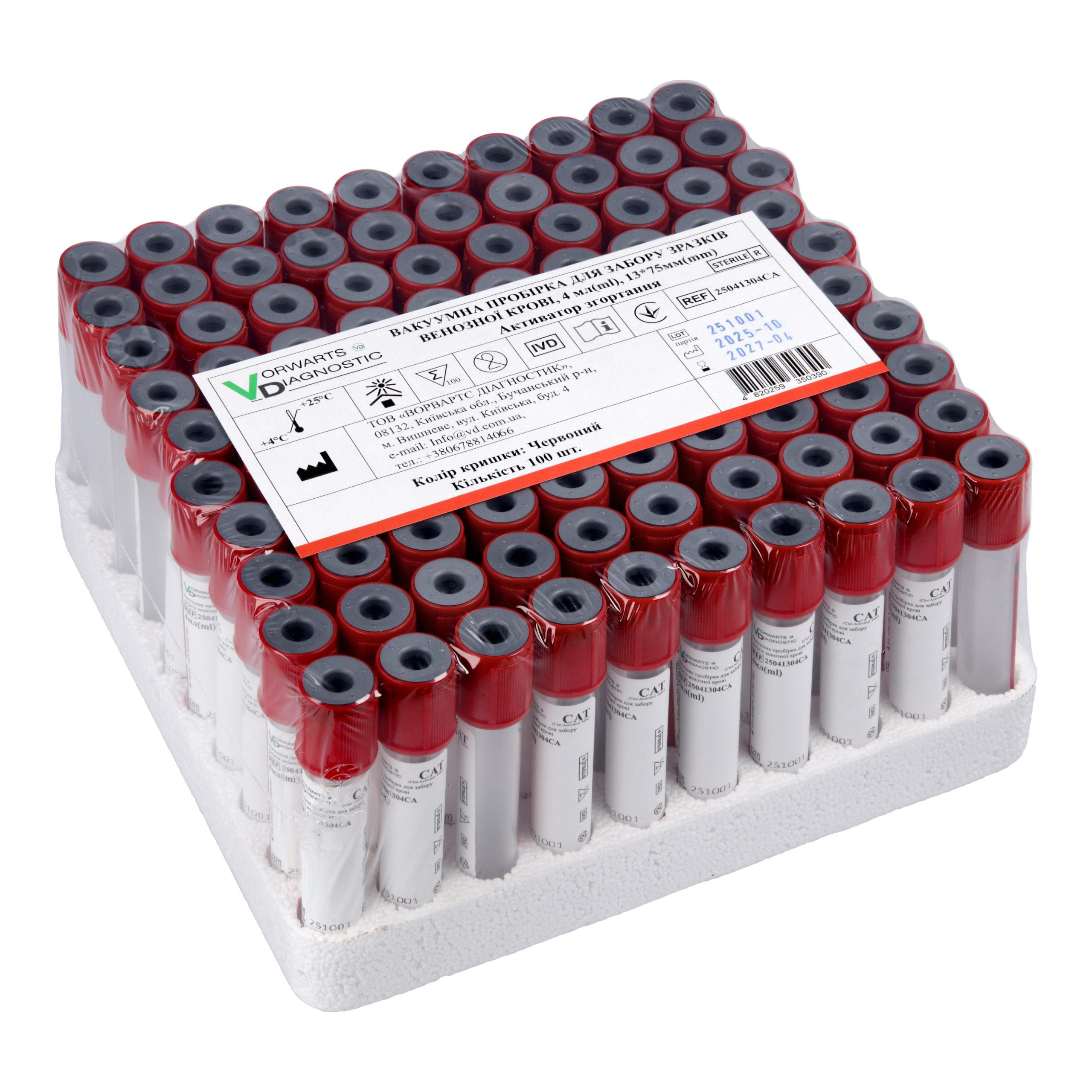
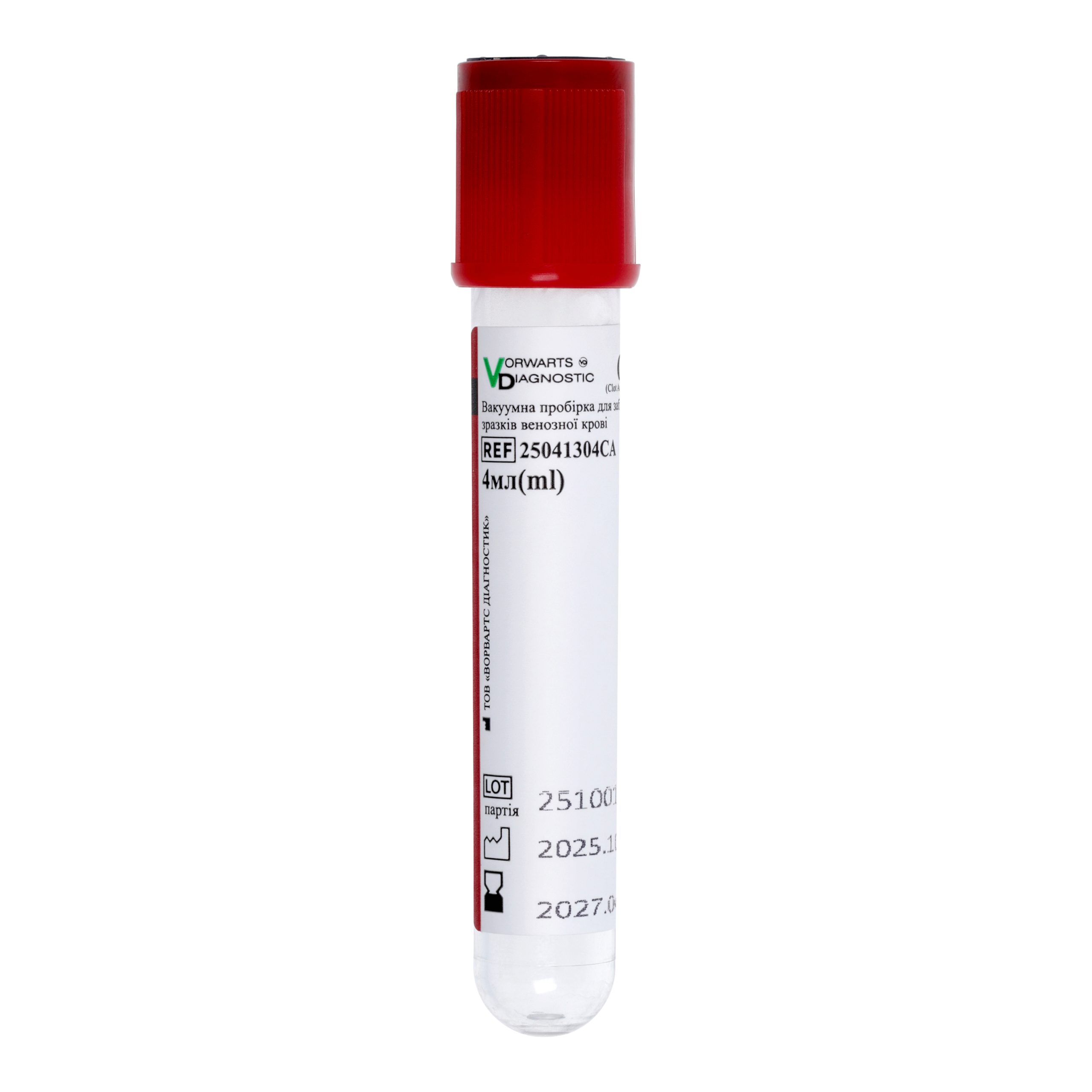
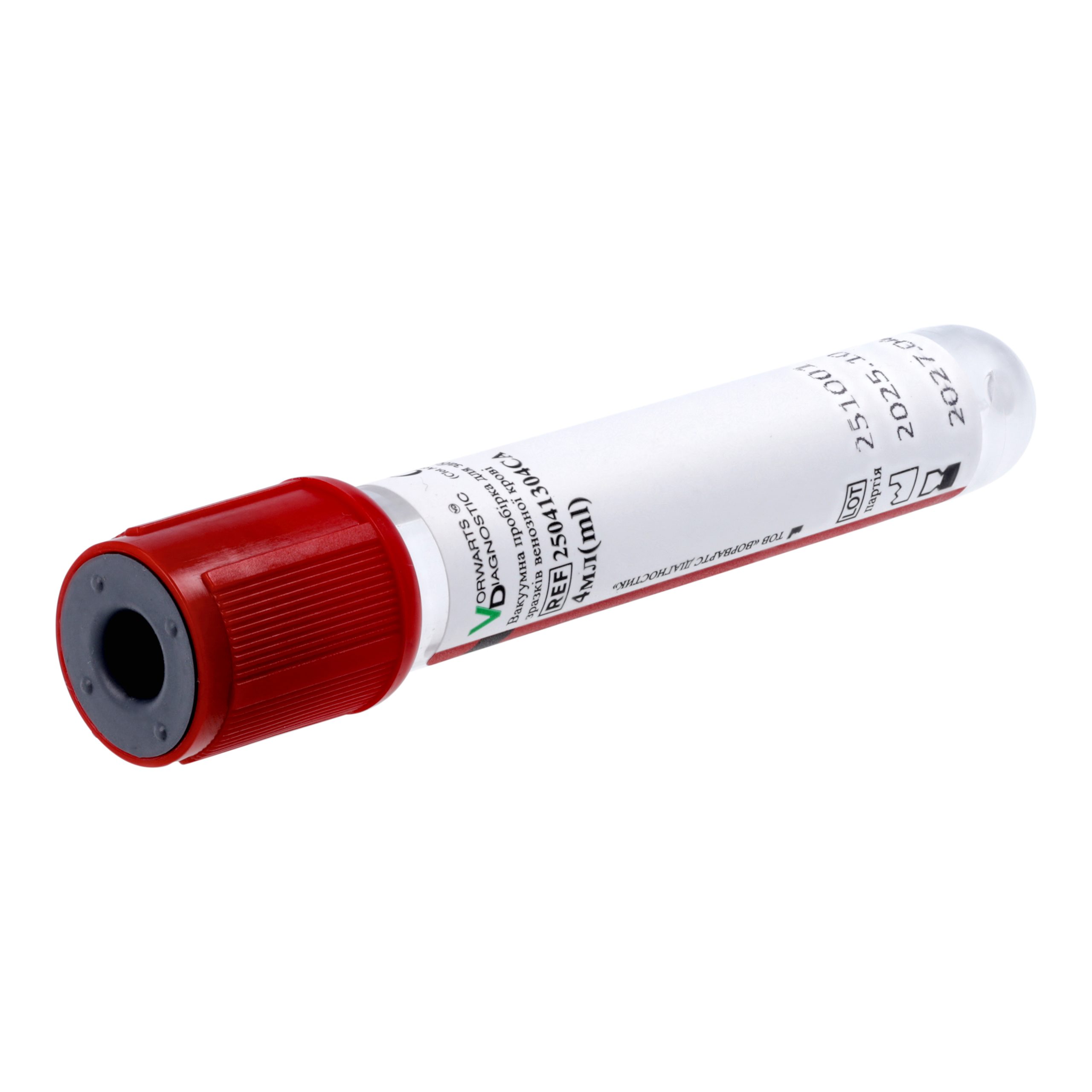
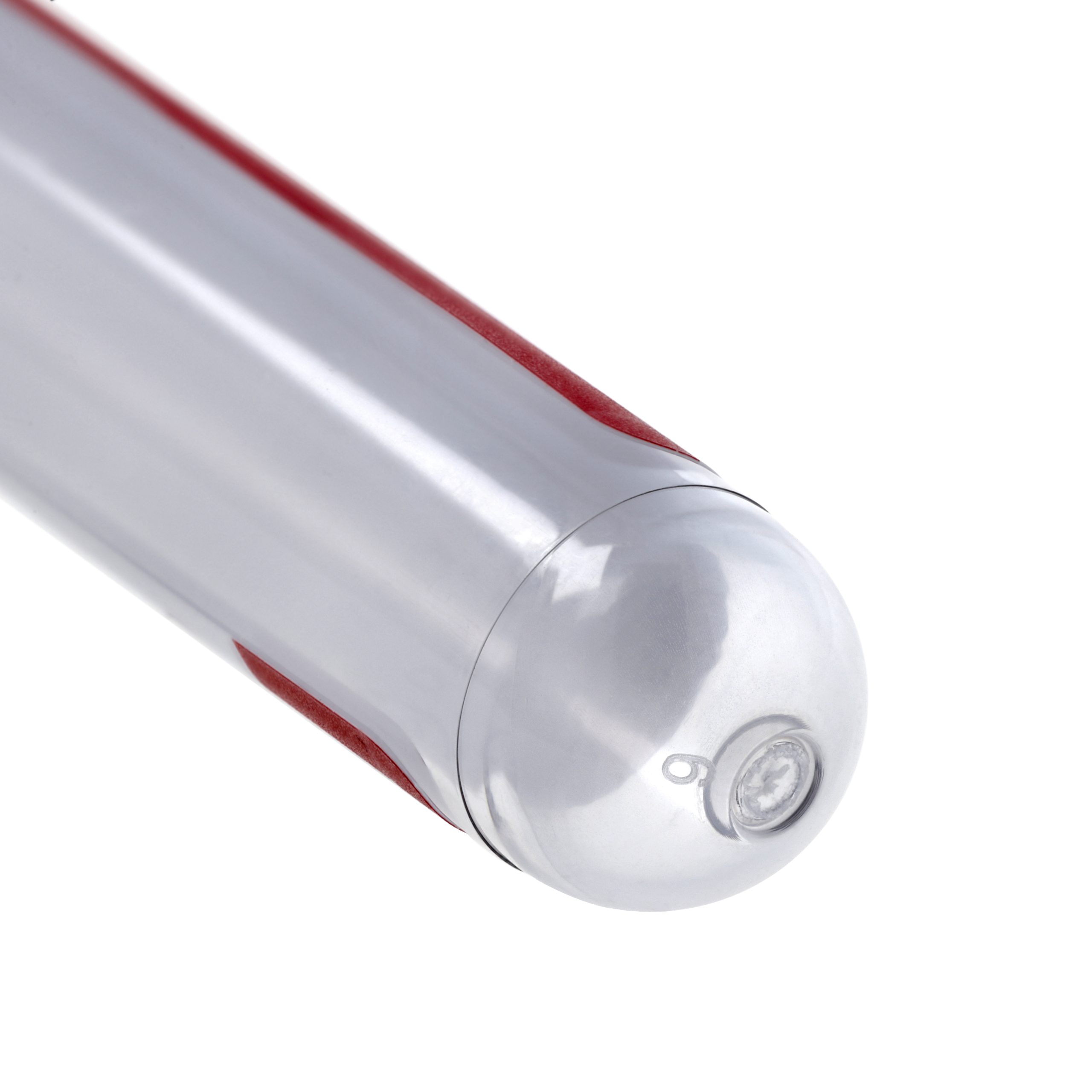
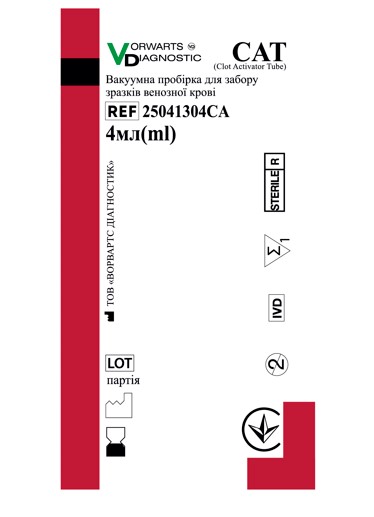
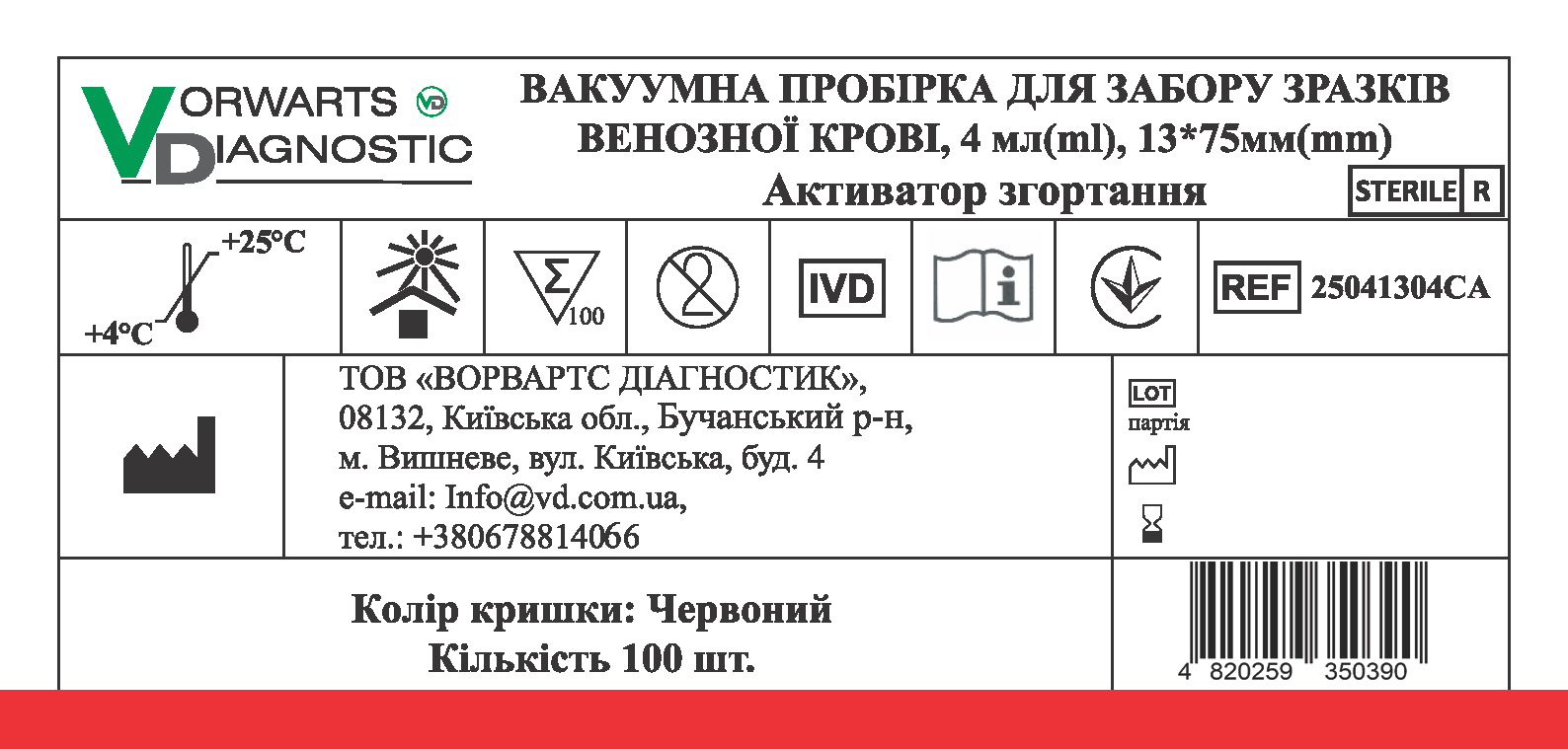
Specifications:
| Color | Red |
| Filler | Clot activator |
| Size 13*75 mm | Volume 4 ml |
| Size 13*100 mm | Volume 6 ml |
| Size 16*100 mm | Volume 9 ml |
| Packaging | 100 pcs |
Field of application: for serum research and clinical chemistry, immunology, serology, for protein electrophoresis.
Test material: serum.
Clotting time: 10-30 min.
Centrifugation: 1800-2000 g, 10 min.
Features: after taking a blood sample in a vacuum tube, it should be gently mixed by inverting 5-6 times. Tubes should be centrifuged no later than 2 hours after blood sampling.
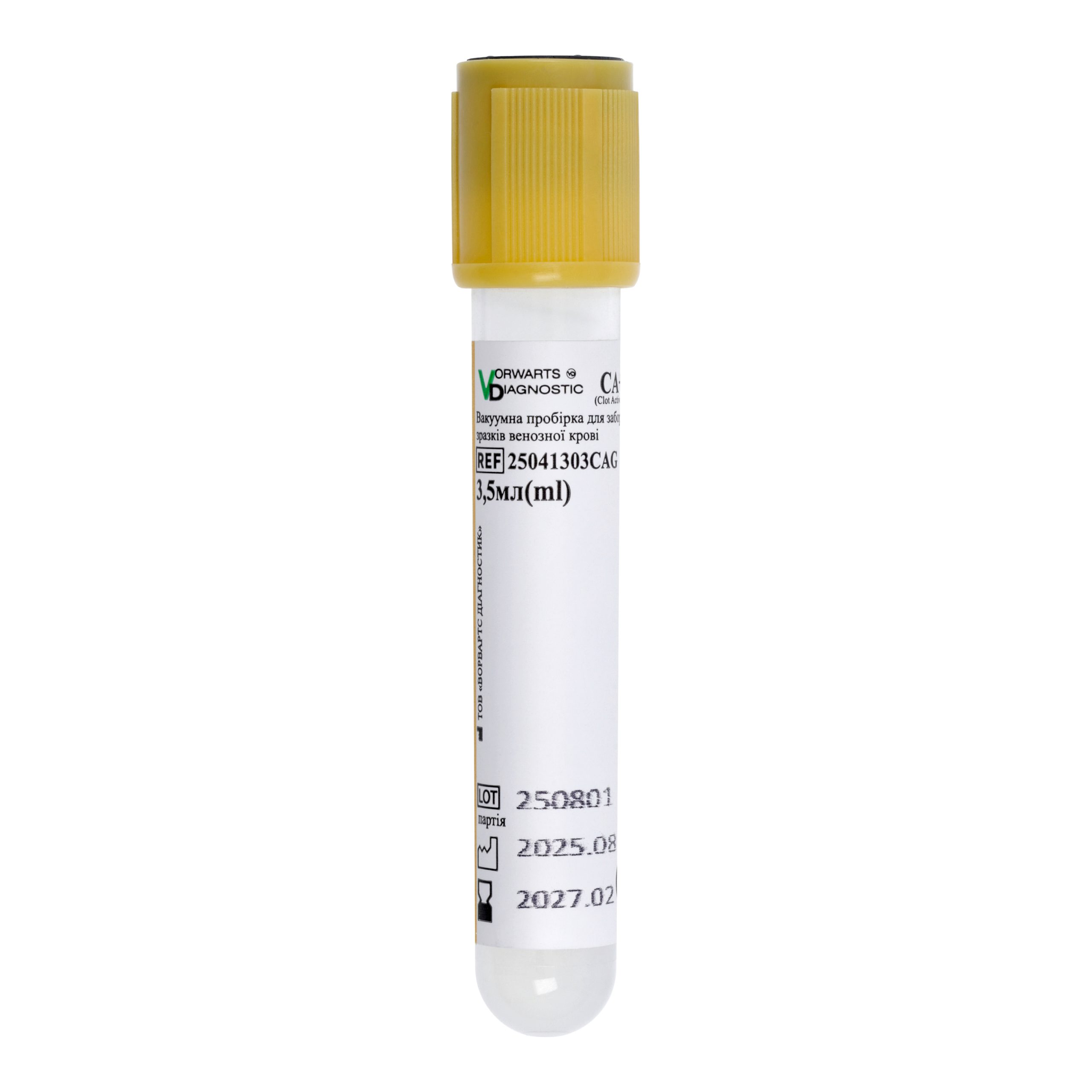
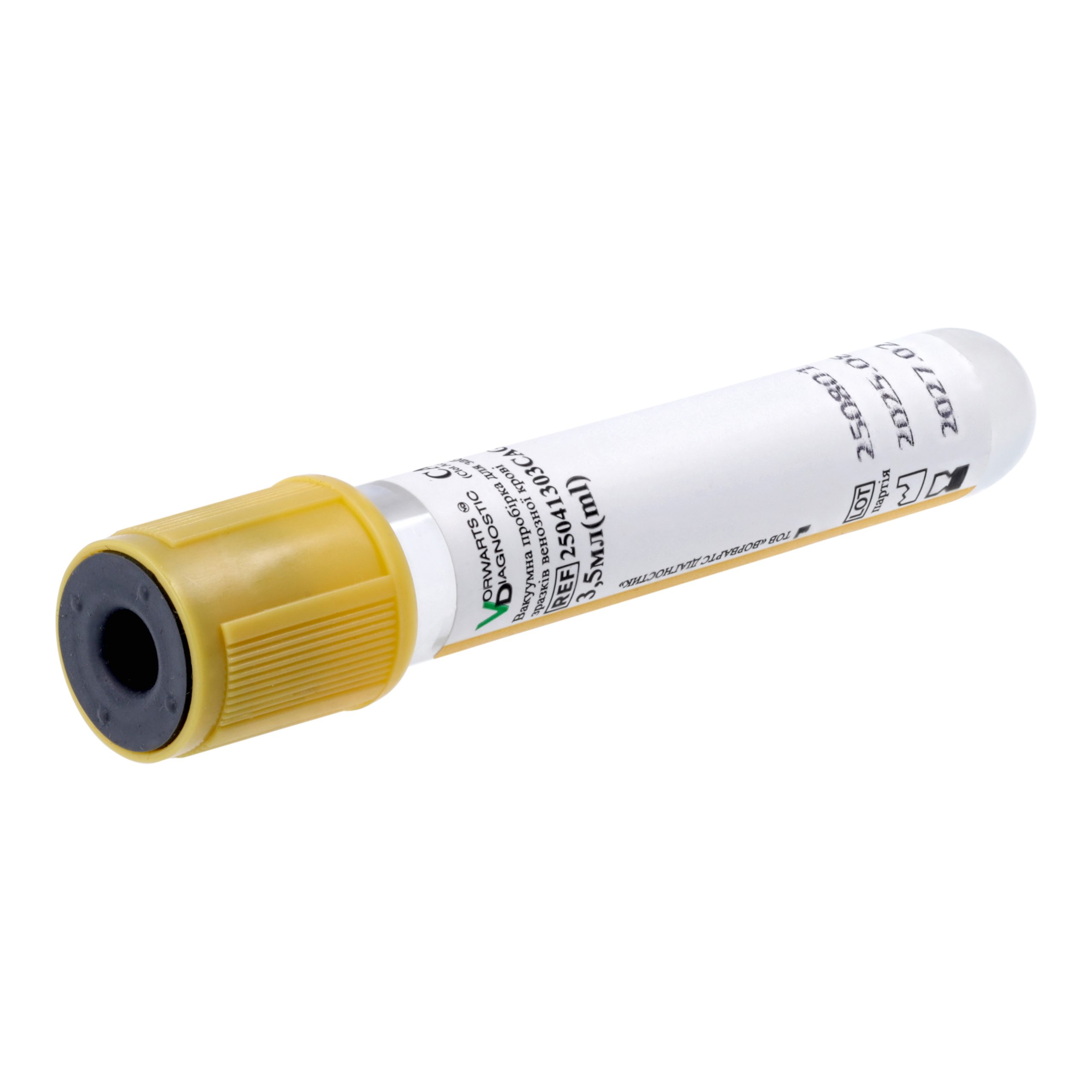
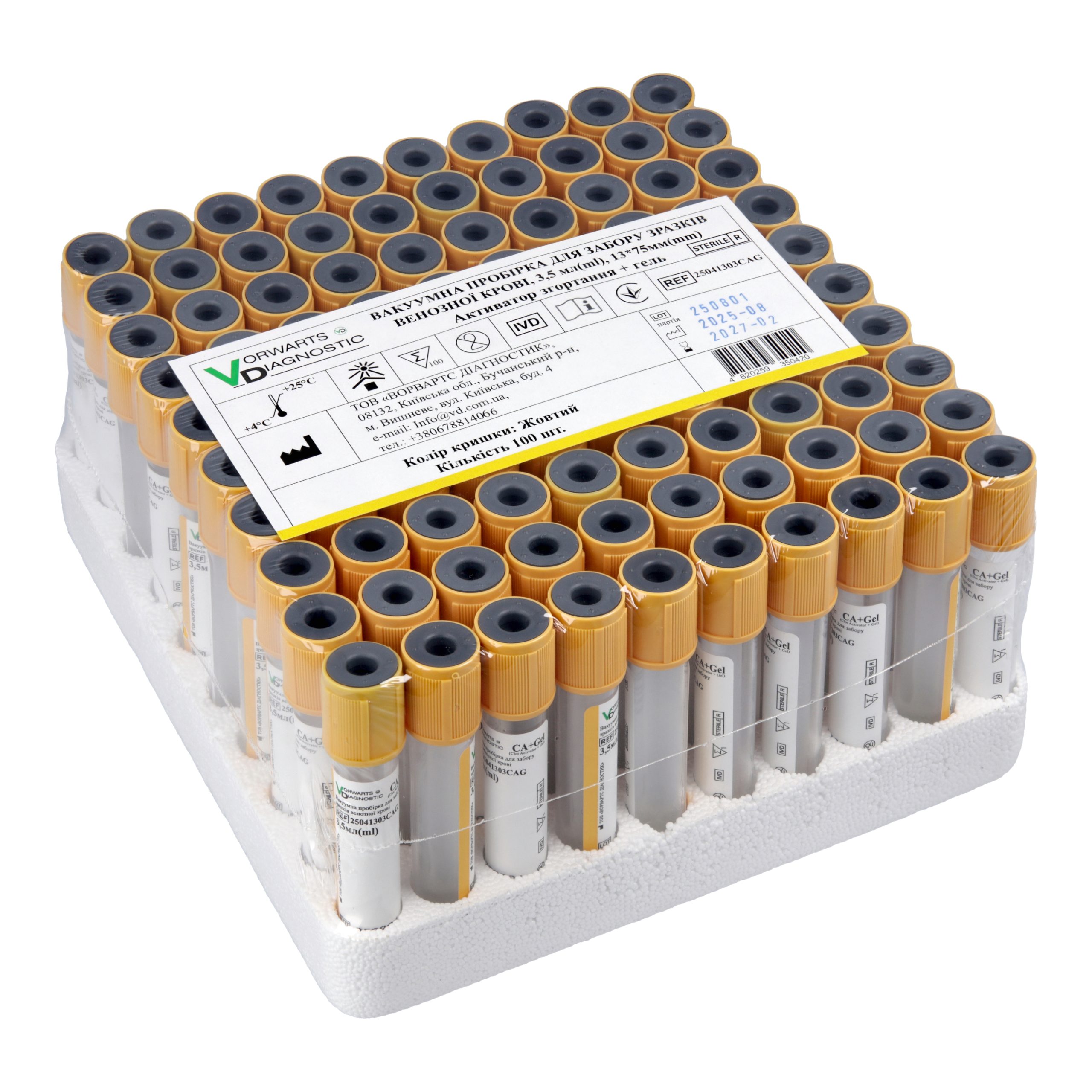
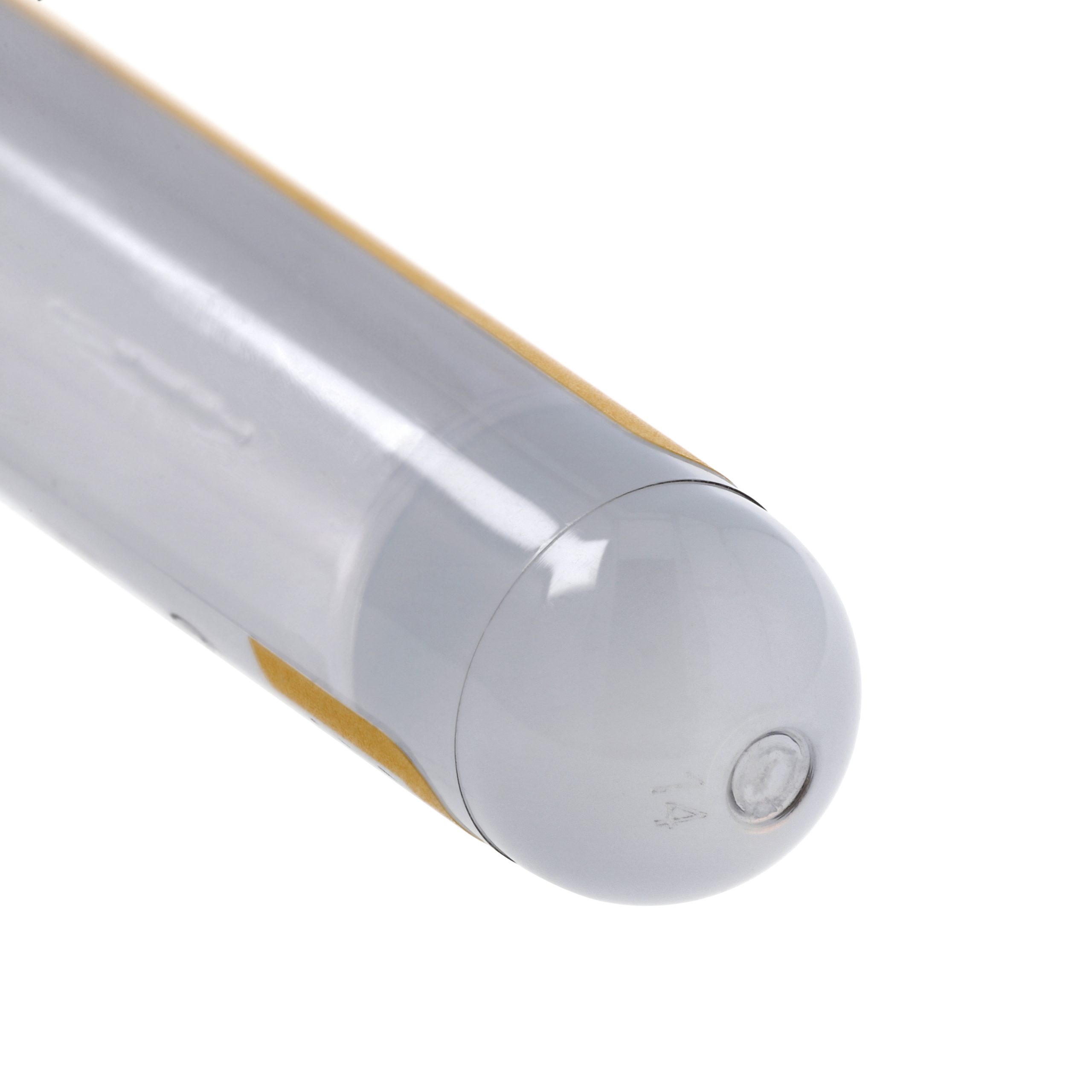
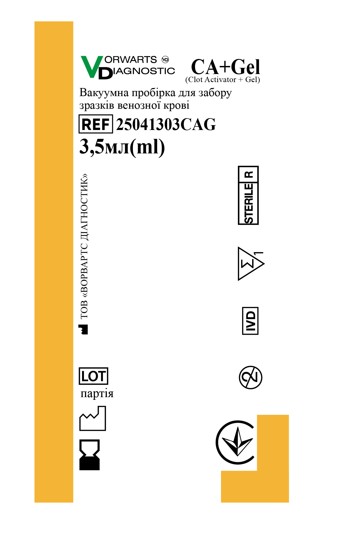
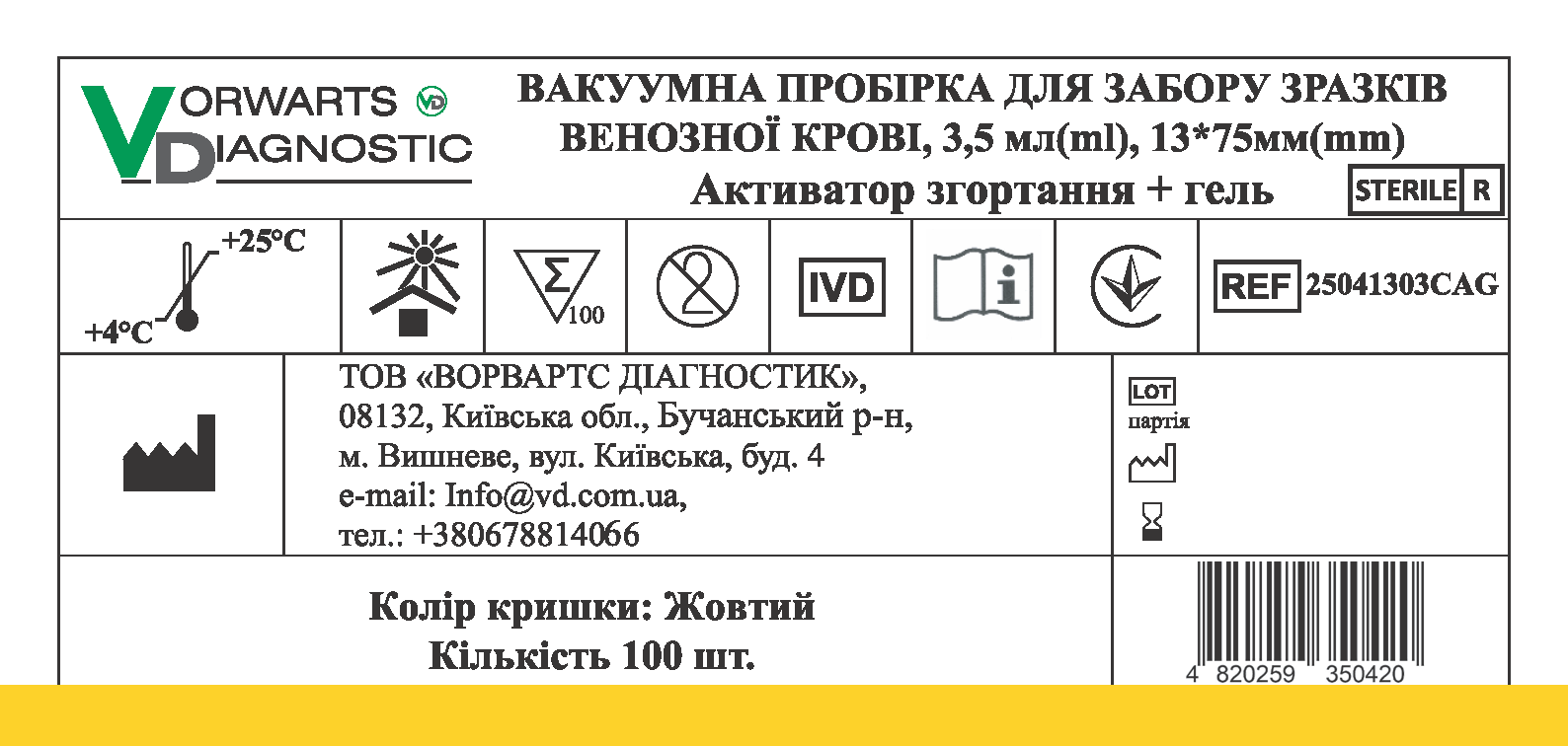
Specifications:
| Color | Yellow |
| Filler | Clot activator & separator gel |
| Size 13*75 мм | Volume 3,5 ml |
| Size 13*100 мм | Volume 5 ml |
| Size 16*100 мм | Volume 8 ml |
| Packaging | 100 pcs |
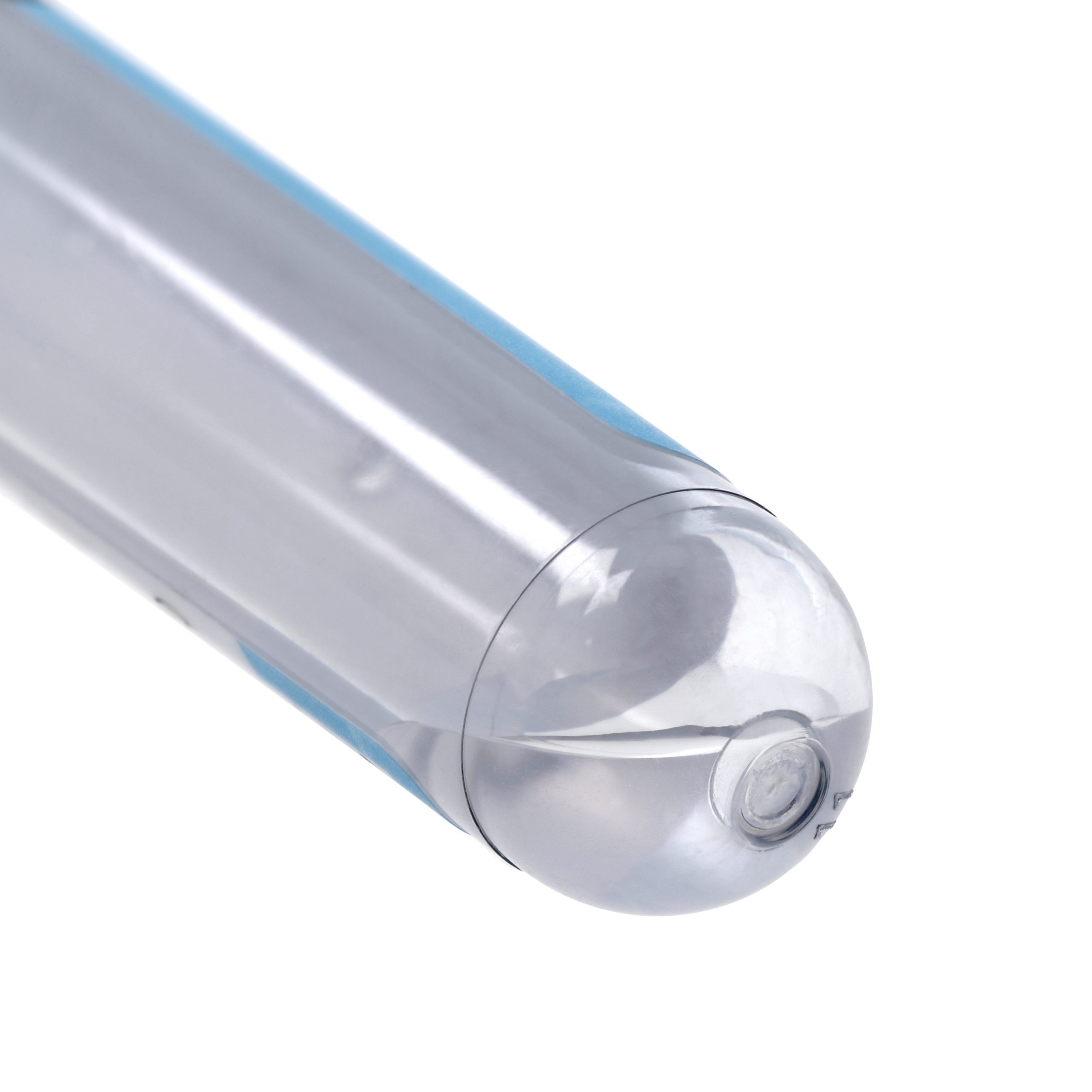
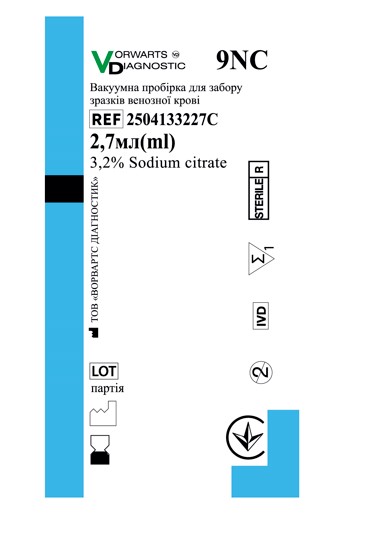
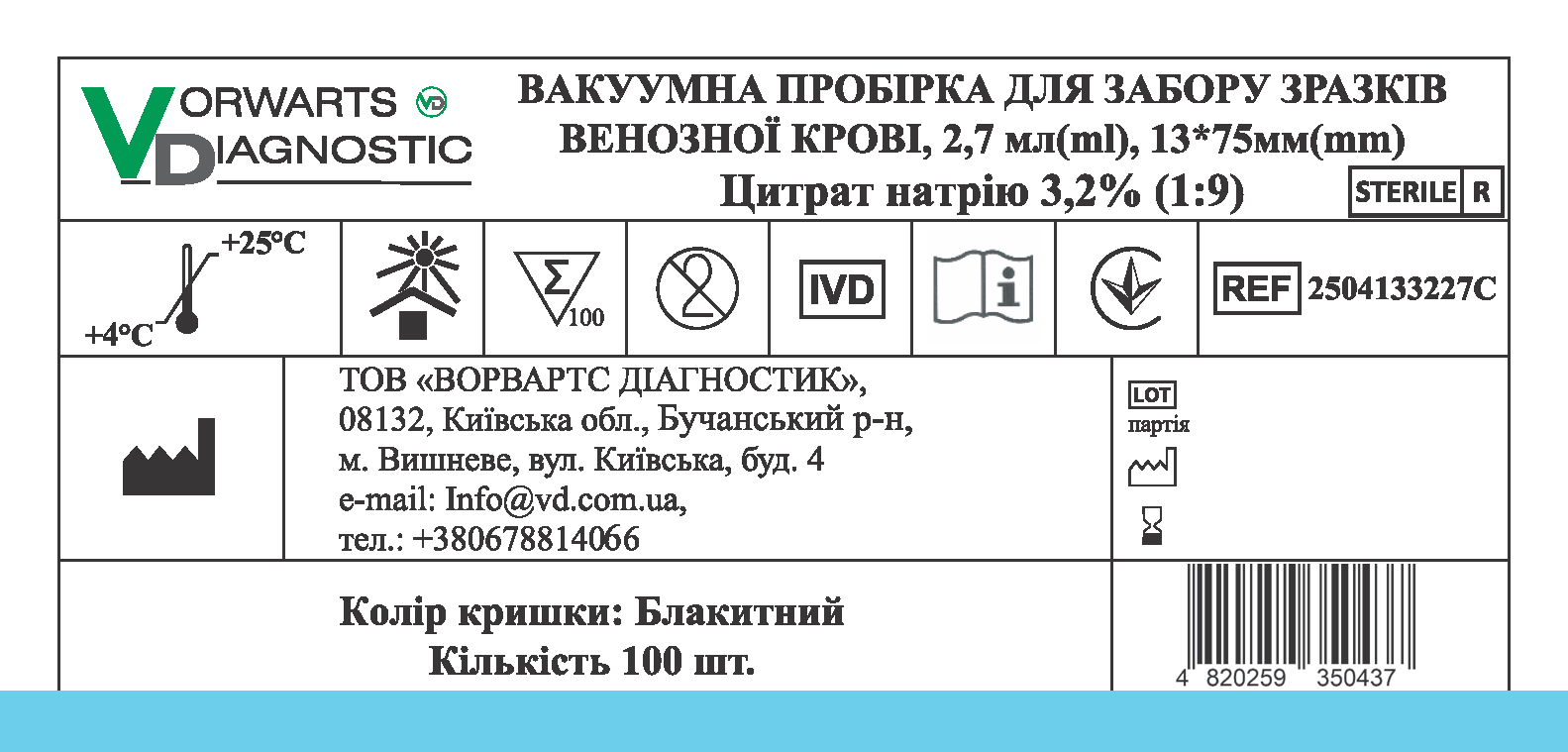
Field of application: study of the hemostasis system, for coagulological studies.
Material for study: citrate plasma.
Collapse time: not collapse.
Centrifugation: 2000-2500 g, 10-15 min.
Features: the ratio of blood to anticoagulant 9:1; once the sample is taken, the citrate tube must be gently mixed at least 5 times to prevent the formation of micro-clots.
Specifications:
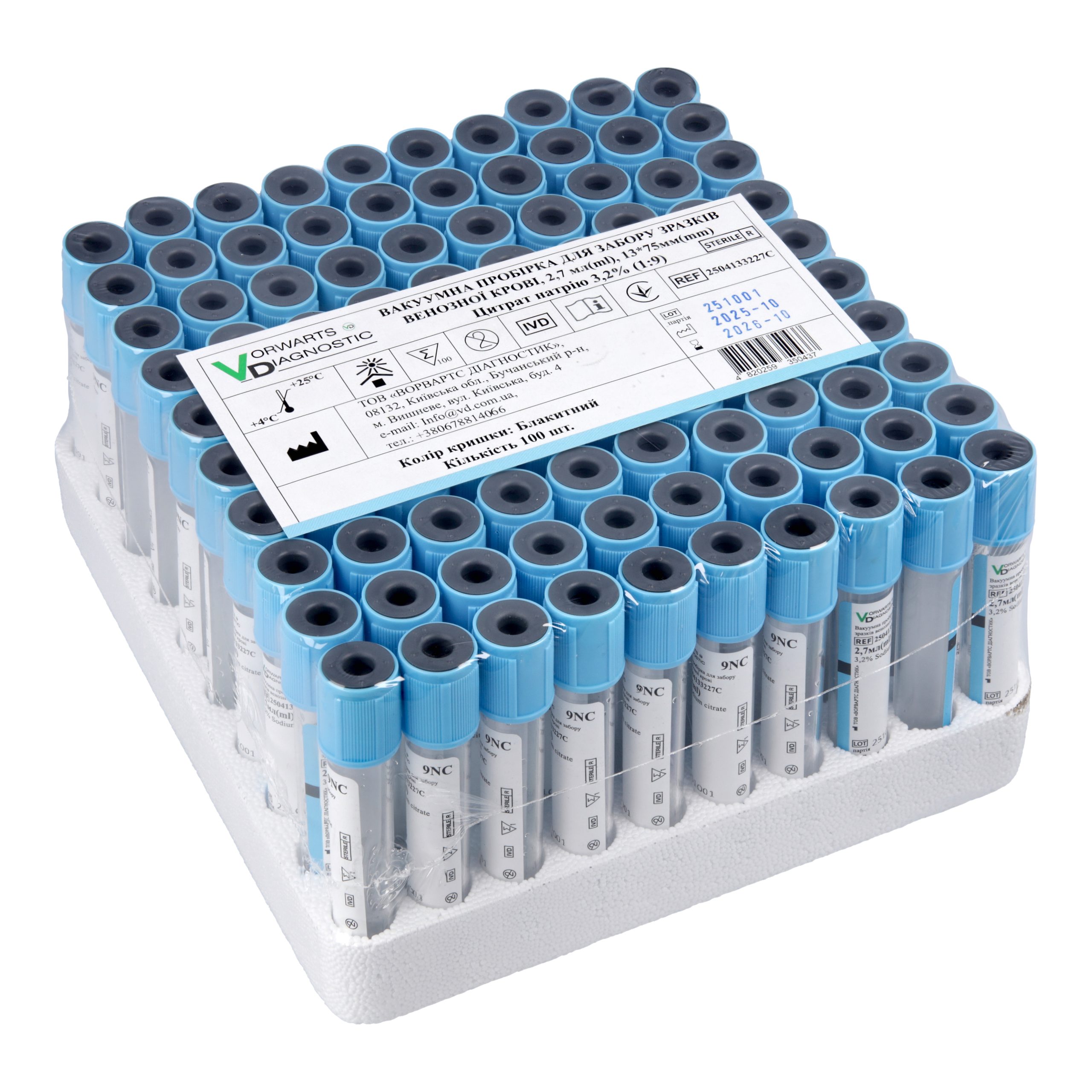
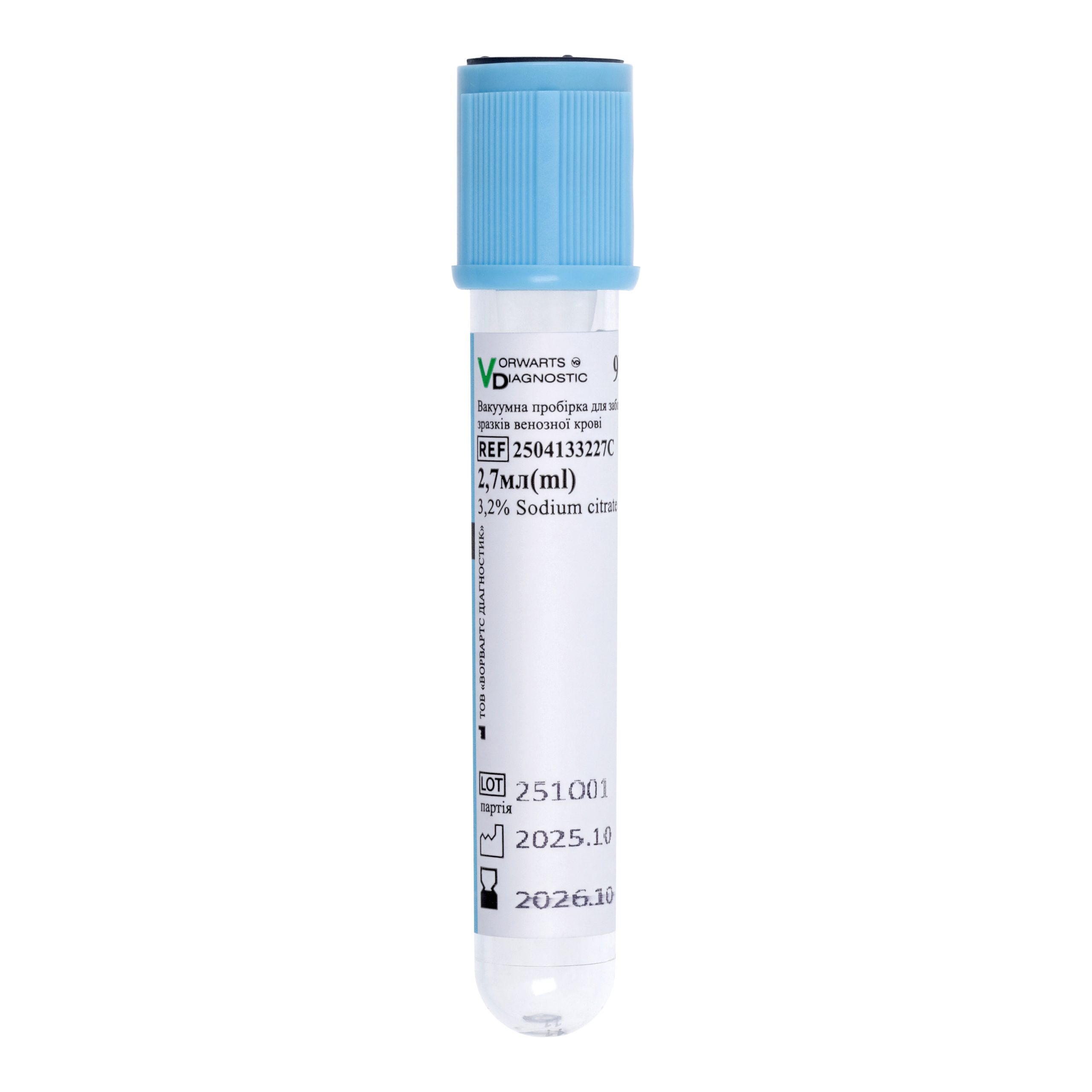
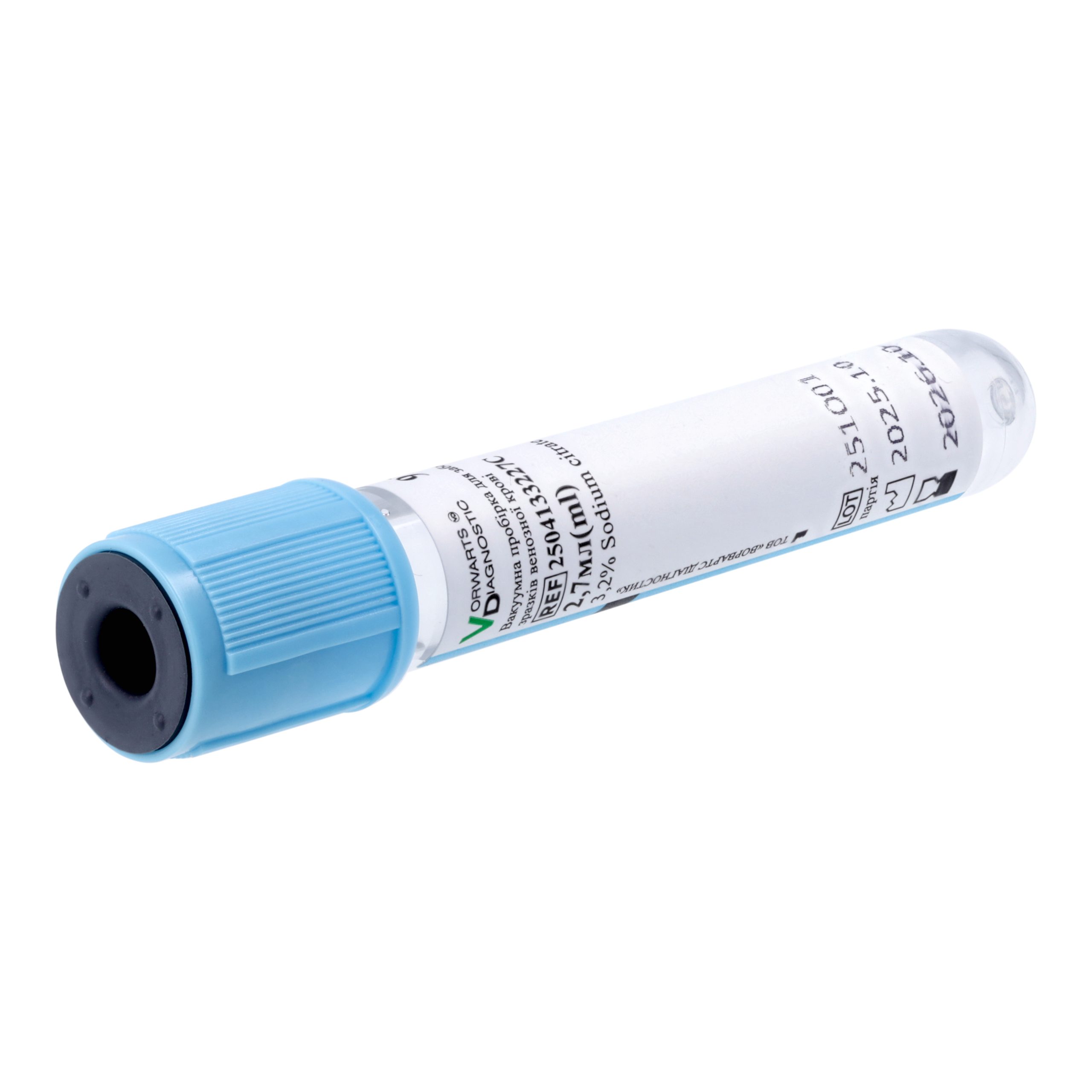
| Color | Blue |
| Filler | Sodium citrate 3,2% |
| Size 13*75 mm | Volume 1,8, 2,7 and 3,6 ml |
| Packaging | 100 pcs |
Scope: specialized coagulation studies, hemostasiology.
Material for study: citrate plasma.
Collapse time: not collapse.
Centrifugation: 2000-2500 g, 10-15 min.
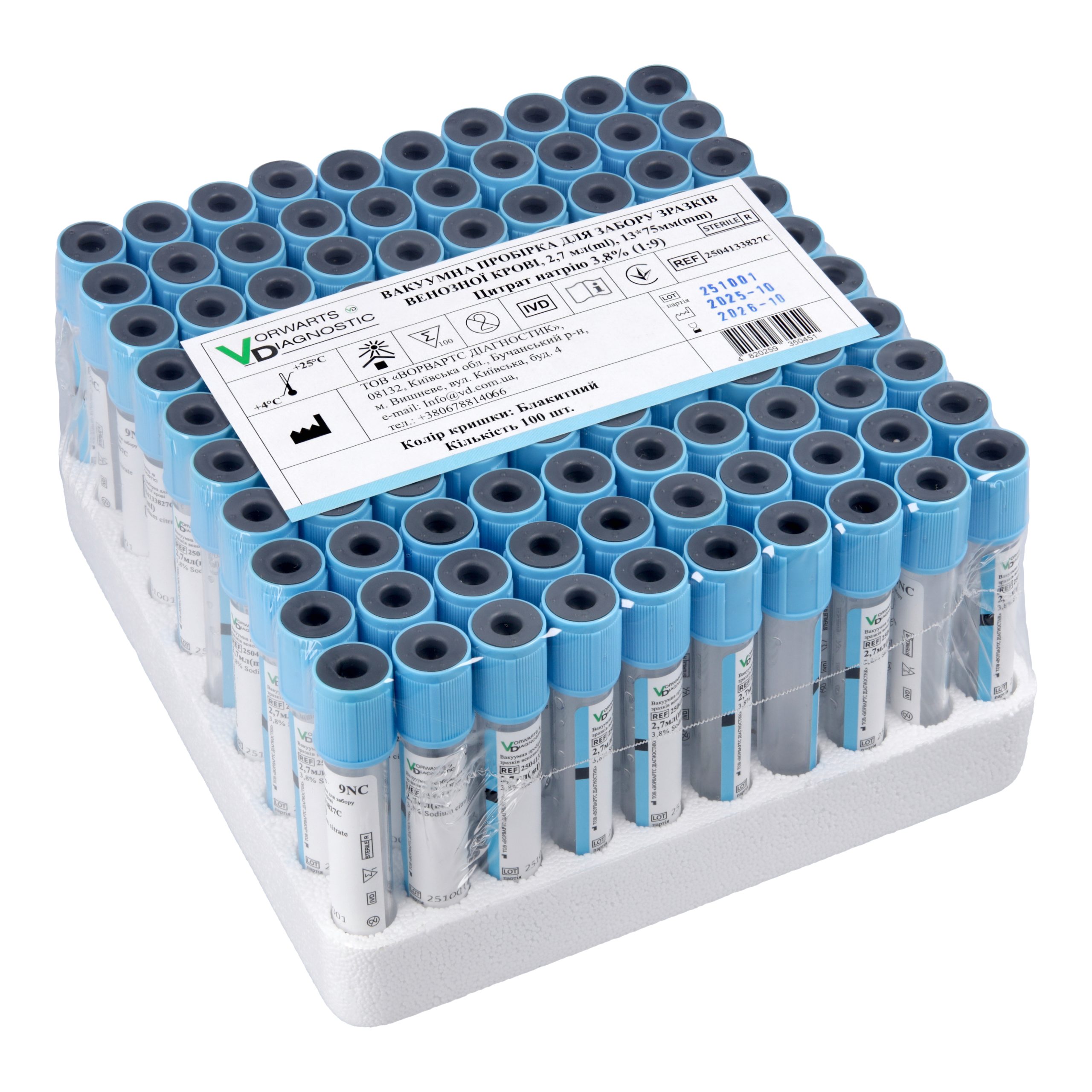
Features: used mainly in studies requiring a higher concentration of anticoagulant; the ratio of blood to anticoagulant 9:1; once the sample is taken, the citrate tube must be gently mixed at least 5 times to prevent the formation of micro-clots.
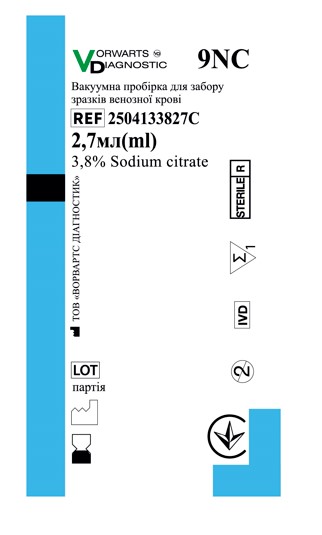
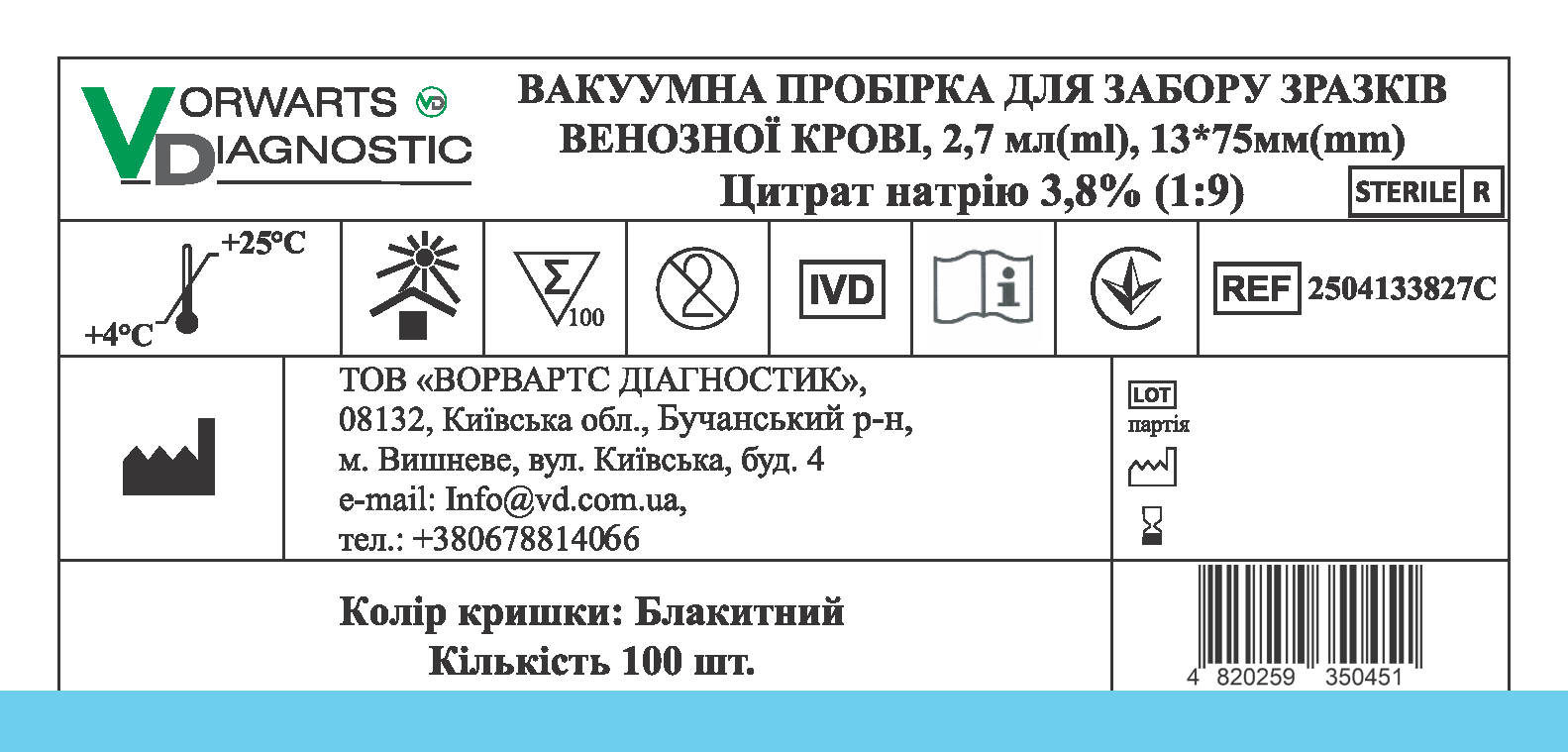
Specifications:
| Color | Blue |
| Filler | Sodium citrate 3,8% |
| Size 13*75 mm | Volume 1,8; 2,7 and 3,6 ml |
| Packaging | 100 pcs |
Field of application: to obtain heparinized blood plasma for biochemical, serological, immunological studies, express diagnostics.
Test material: heparinized plasma.
Collapse time: not collapse.
Centrifugation: 1300 g, 10 min.
Features: immediately after filling the tube, the sample must be thoroughly and gently mixed by turning 8-10 times; centrifugation should be carried out immediately after blood collection; does not affect the level of ions.
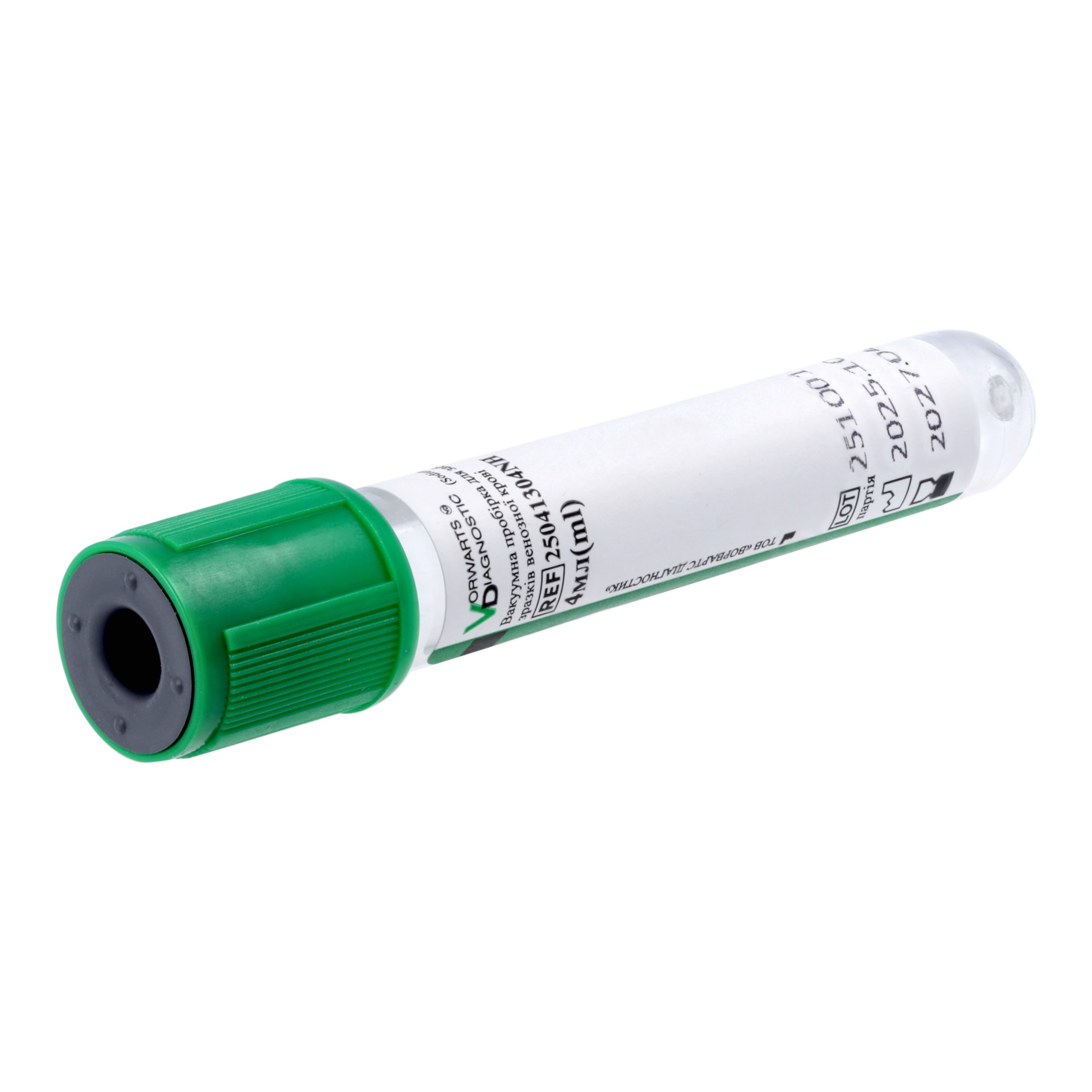
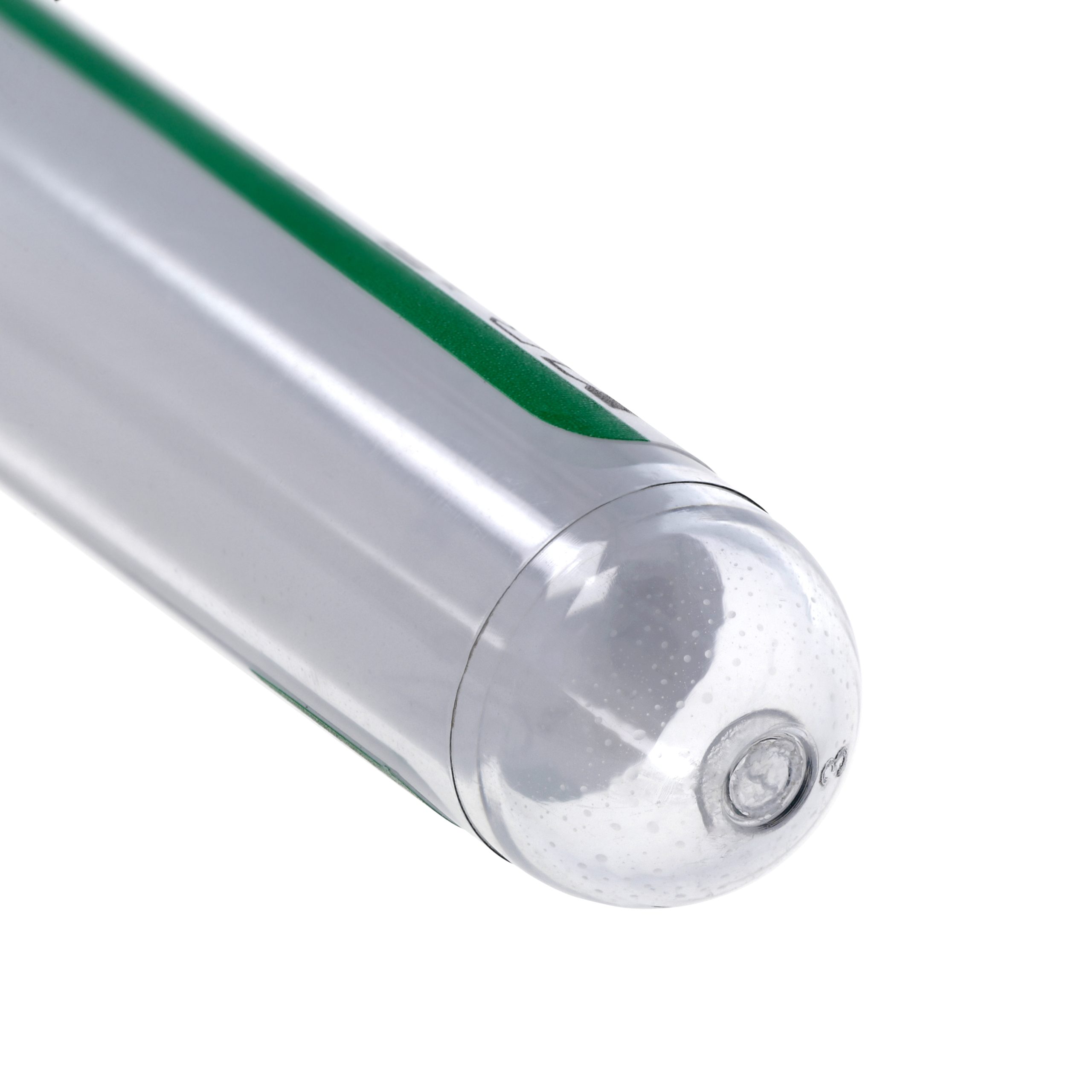
Specifications:
| Color | Green |
| Filler | Lithium heparin |
| Size 13*75 mm | Volume 2 and 4 ml |
| Size 13*100 mm | Volume 6 ml |
| Size 16*100 mm | Volume 9 ml |
| Packaging | 100 pcs |
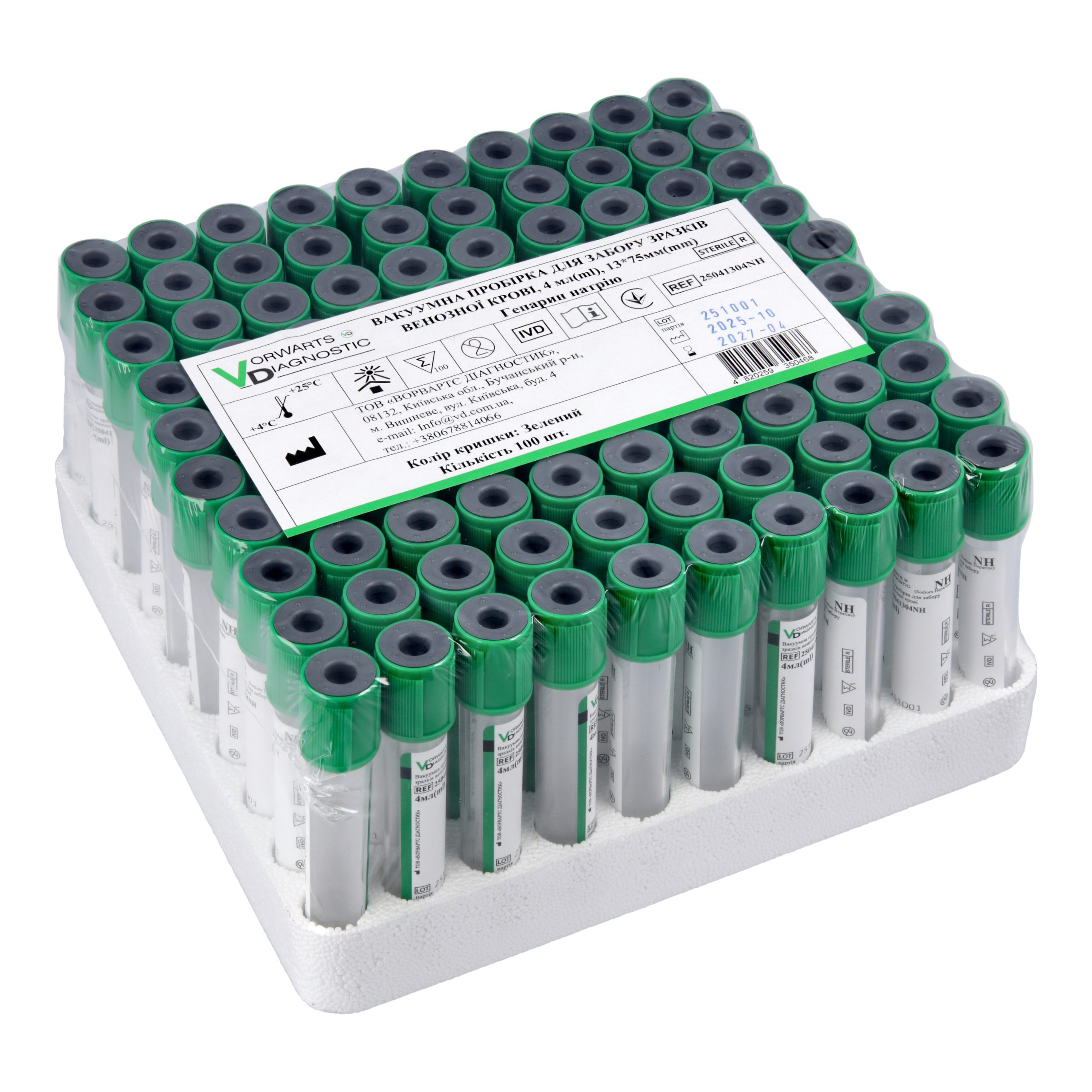
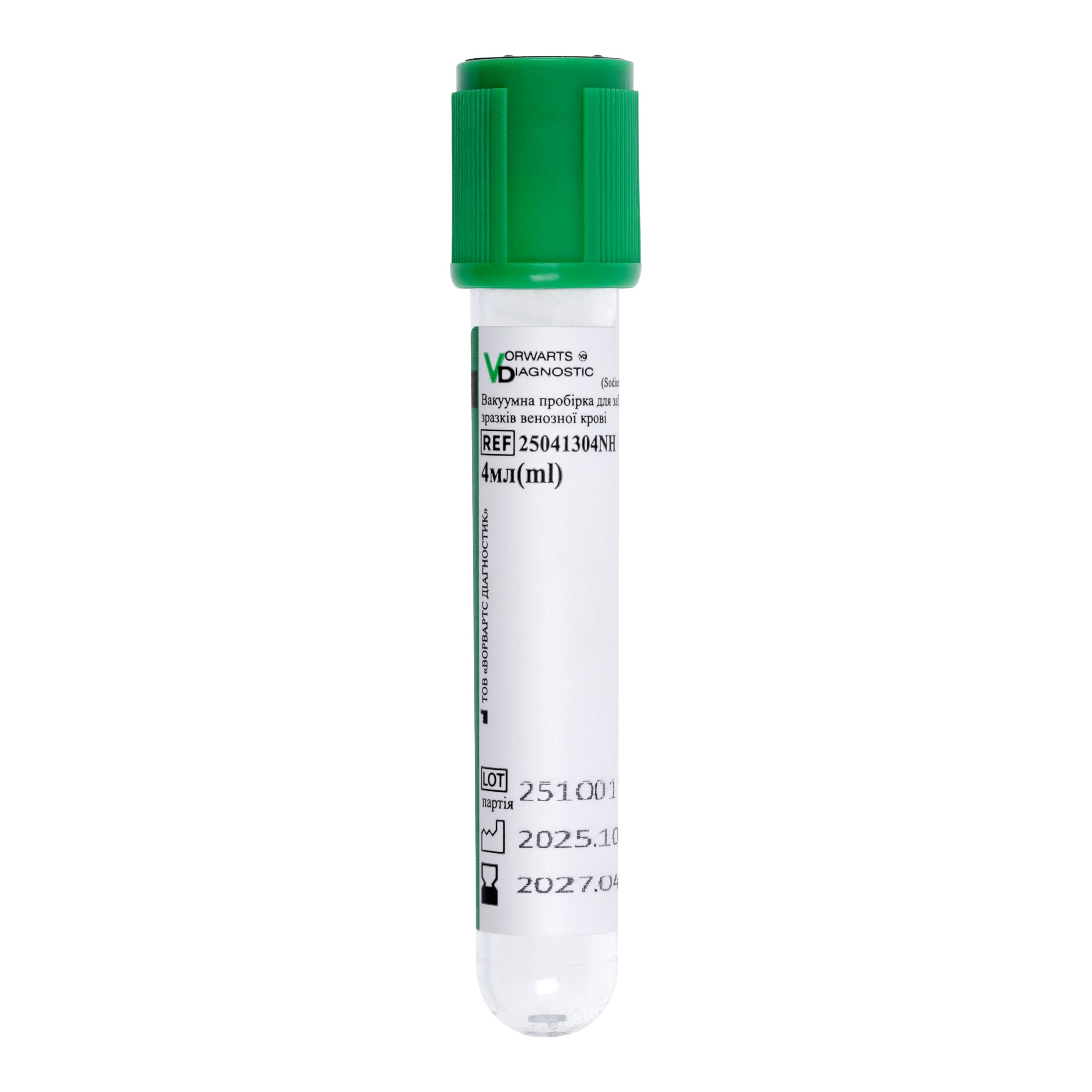
Field of application: to obtain plasma used in biochemical studies.
Test material: heparinized plasma.
Collapse time: not collapse.
Centrifugation: 1300 g, 10 min.
Features: immediately after filling the tube, the sample must be thoroughly and gently mixed by turning 8-10 times; centrifugation should be carried out immediately after blood collection; sodium heparin can affect the determination of ions – limitations in analytical methods.
Specifications:
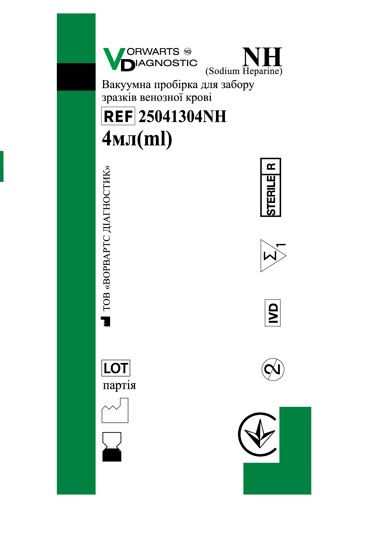
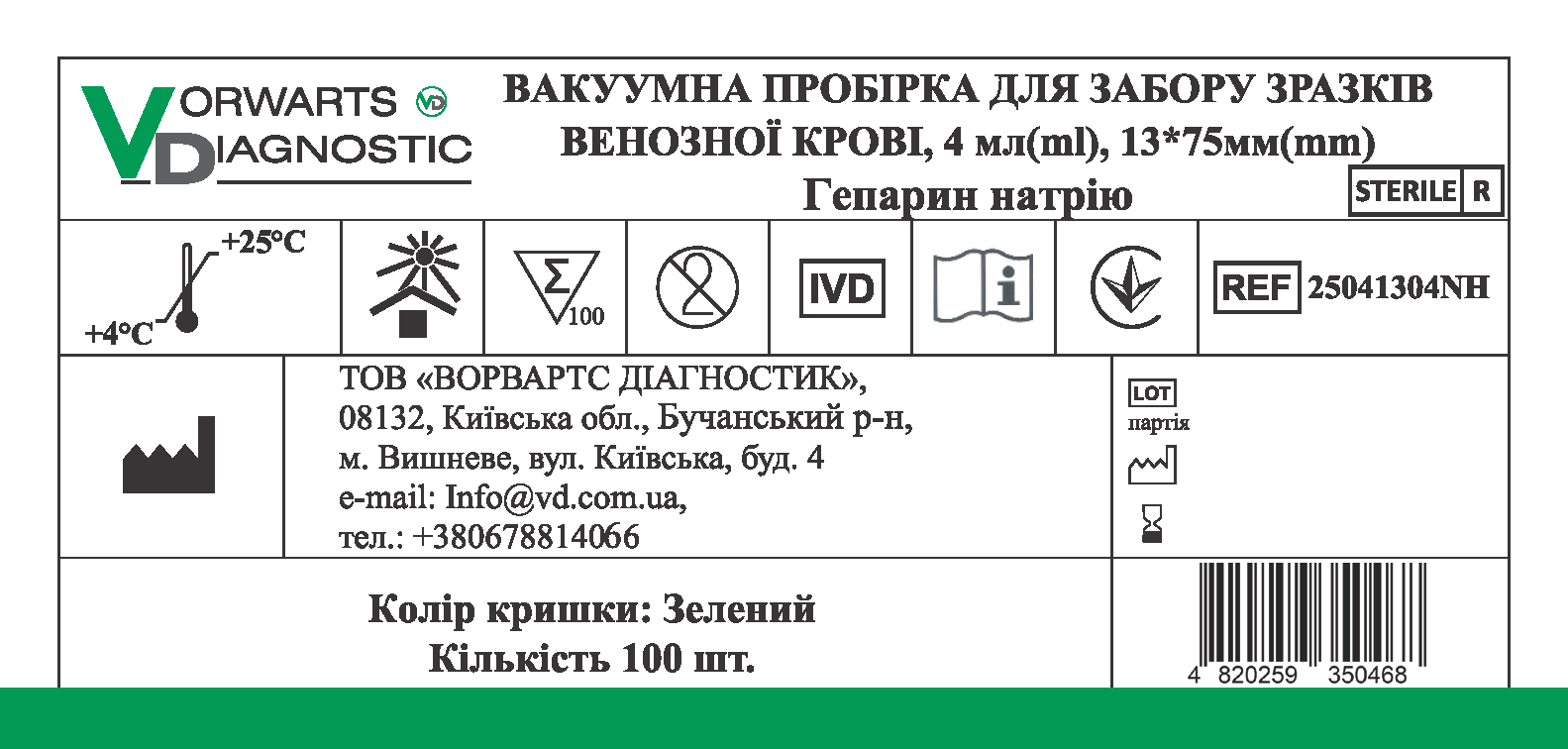
| Color | Green |
| Filler | Sodium heparin |
| Size 13*75 mm | Volume 2 and 4 ml |
| Size 13*100 mm | Volume 6 ml |
| Size 16*100 mm | Volume 9 ml |
| Packaging | 100 pcs |
Field of application: to obtain heparinized blood plasma for biochemical, serological, immunological studies, express diagnostics.
Test material: heparinized plasma.
Collapse time: not collapse
Centrifugation: 1300 g, 10 min.
Features: immediately after filling the tube, the sample must be thoroughly and gently mixed by turning 8-10 times; centrifugation should be carried out immediately after blood collection; separating gel promotes more stable separation of blood plasma from blood cells, which improves the accuracy of the study and allows transporting the tube without the risk of mixing.

Specifications:
| Color | Green |
| Filler | Lithium heparin & separation gel |
| Size 13*75 mm | Volume 4 ml |
| Size 13*100 mm | Volume 6 ml |
| Size 16*100 mm | Volume 9 ml |
| Packaging | 100 pcs |
Field of application: to obtain plasma used in biochemical studies.
Test material: heparinized plasma.
Collapse time: not collapse
Centrifugation: 1300 g, 10 min.
Features: immediately after filling the tube, the sample must be thoroughly and gently mixed by turning 8-10 times; centrifugation should be carried out immediately after blood collection; separating gel promotes more stable separation of blood plasma from blood cells, which improves the accuracy of the study and allows transporting the tube without the risk of mixing.
Specifications:
| Color | Green |
| Filler | Sodium heparin & separator gel |
| Size 13*75 mm | Volume 4 ml |
| Size 13*100 mm | Volume 6 ml |
| Size 16*100 mm | Volume 9 ml |
| Packaging | 100 pcs |